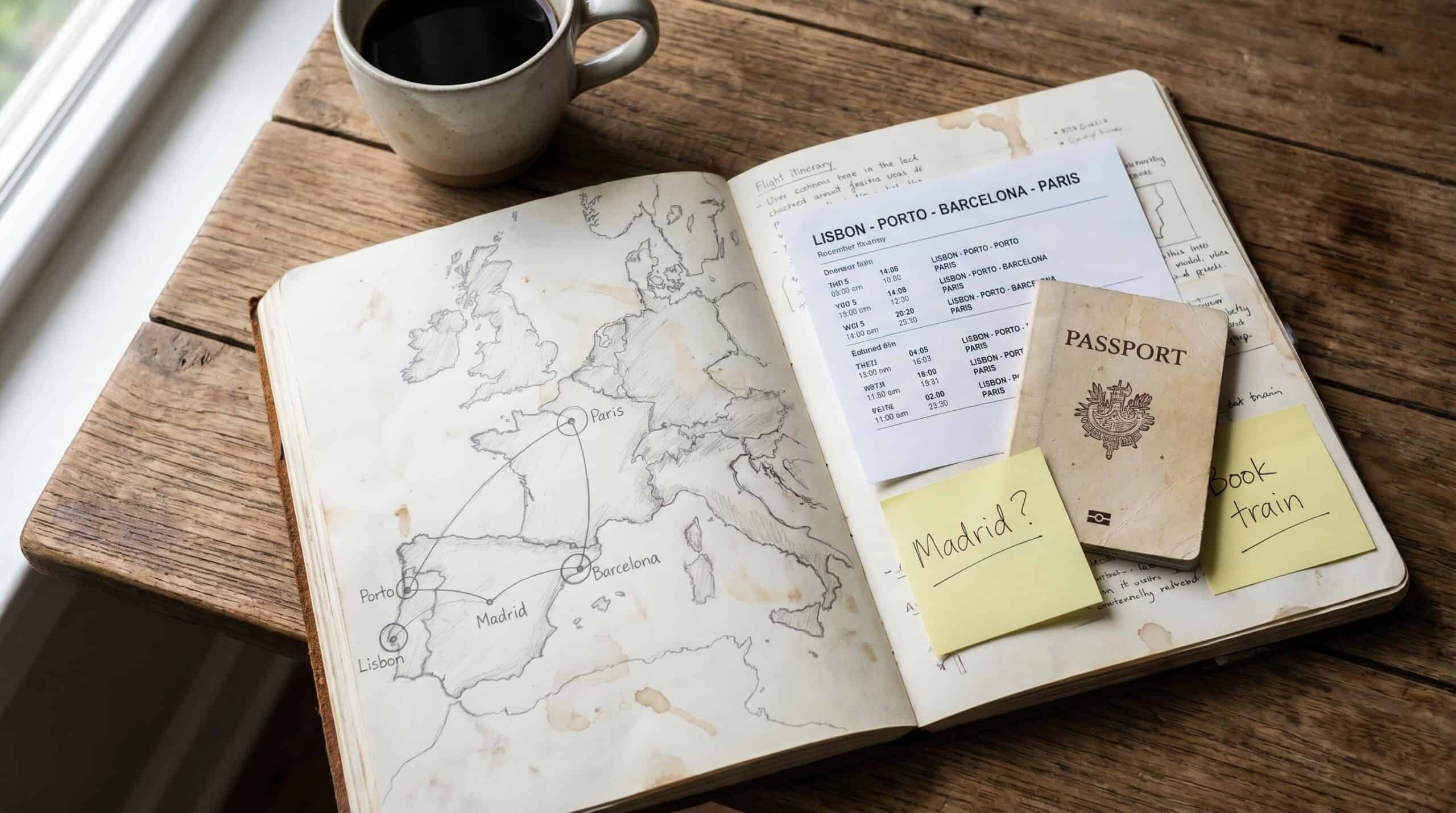

Why Europe Feels Overwhelming Before You Go (And Why It Shouldn't)
You open Google and type "where to go in Europe" and suddenly you're drowning in tabs. Paris vs Rome. Scandinavia or the Mediterranean. Three weeks or two? Train or fly? Should you even bother with a tour?
Here's the thing — everyone who has ever landed at a European airport for the first time and felt completely lost ended up fine. Better than fine, actually. Europe is one of the most forgiving destinations for first-time international travelers. Cities are walkable. Signs are usually in English too. Public transport works. And locals, despite whatever reputation they may carry online, are almost always helpful when you approach them with a bit of patience and a smile.
This Europe travel guide for first timers is not a laundry list of tourist attractions you already know exist. It's the honest, practical advice that actually changes how a trip goes — the kind your well-traveled friend gives you over coffee rather than what ends up in glossy brochures.
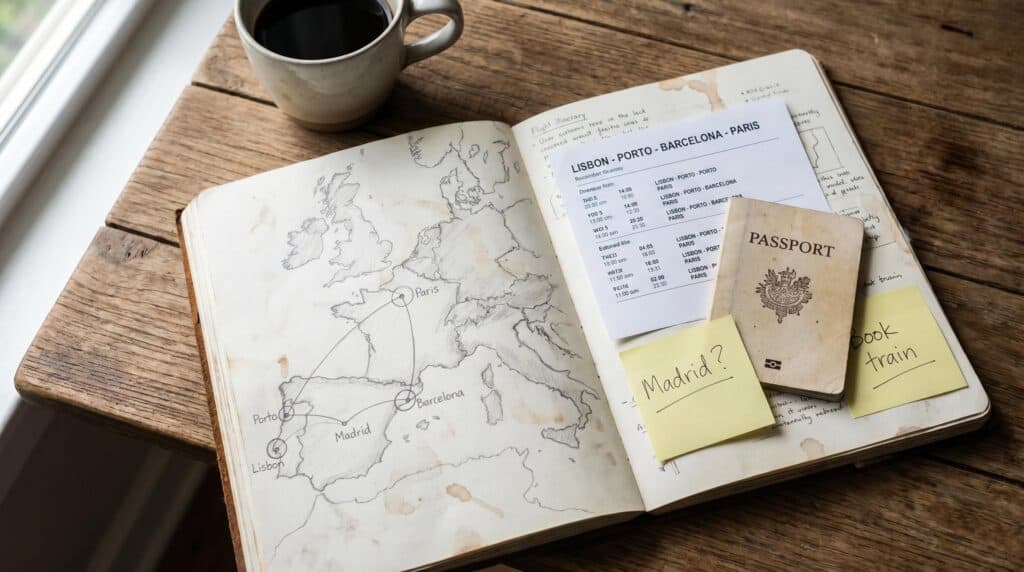
Building Your Europe Trip Itinerary for Beginners
The single biggest mistake first-timers make is treating Europe like a checklist. Twelve cities in fourteen days. A different hotel every night. A photo at every landmark. You come home exhausted, with blurry memories and aching feet, wondering why you didn't feel that magic everyone talks about.
The magic requires stillness. You don't find it rushing through a museum in 45 minutes because the next train leaves at 2pm.
The Golden Rule: Pick a Region, Not a Continent
Europe is roughly the size of the contiguous United States. You wouldn't plan a road trip that hits New York, Miami, Chicago, Los Angeles, and Seattle in two weeks and call that a proper American experience. Same logic applies here.
For your first Europe trip itinerary, pick one region and go deep:
- Western Europe (France, Spain, Portugal, Netherlands) — iconic, well-connected, great for first-timers
- Southern Europe (Italy, Greece, Croatia) — food, coastlines, history in spades
- Central Europe (Czech Republic, Austria, Hungary, Germany) — underrated, affordable, stunning architecture
- The British Isles (UK, Ireland) — easier for English-speaking first-timers, no language barrier
Choose one. Resist the pressure to add "just one more country."
Europe travel guide for first timers, How Many Countries Can You Realistically Do?
For a 10-day trip: two to three countries, maximum. For two weeks: three to four. For three weeks: four to five if you're strategic about proximity.
These numbers assume you want more than a passport stamp. If you're spending at least two to three nights in each place — ideally three to four — you'll actually feel what it's like to be somewhere instead of just passing through.

The Best European Cities for First-Time Visitors
Not all European cities are created equal for newcomers. Some are endlessly photogenic but logistically confusing. Others are easy to navigate but thin on atmosphere. The cities below strike the right balance.
The "Big Three" That Deliver Every Time
Paris, France. Yes, it's obvious. It's also obvious for good reason. The Louvre, Montmartre, the Seine at dusk, a café crème and a croissant that tastes nothing like the ones at home — Paris delivers on almost every cliché, and that's not a bad thing. Give it four days minimum. Pre-book the Louvre and the Eiffel Tower summit, especially in summer.
Rome, Italy. Rome is the rare city where you can stumble onto history without trying. Turn a corner and there's a 2,000-year-old fountain. Grab a €3 espresso at a standing bar. Eat cacio e pepe in Trastevere. The Vatican requires advance booking and half a day — at least. Budget three to four days here too.
Barcelona, Spain. Architecture you won't believe is real, a food scene that could justify the entire trip, and beaches within walking distance of the old city. Barcelona rewards wandering. Don't over-plan it.
Underrated Cities Worth Considering
If you want to avoid peak-season crowds while still having a world-class experience, consider these as alternatives or additions:
- Porto, Portugal — fairy-tale tiles, port wine caves, and almost no crowds compared to Lisbon
- Bologna, Italy — arguably better food than any other Italian city, practically no tourists
- Ghent, Belgium — medieval canals, great beer, and all the charm of Bruges without the tour buses
- Seville, Spain — tapas culture at its finest, flamenco in the streets, and hot in the best possible way

How Long Should Your First Europe Trip Be?
This is one of the most searched questions in every Europe travel guide for first timers, and the honest answer is: longer than you think, shorter than you want.
10 Days: The Minimum That Makes Sense
Ten days sounds like a lot until you account for jet lag (give yourself a full day), travel days between cities, and the simple fact that everything takes longer than expected. Ten days works well for two countries with two or three stops each. You won't see everything, but you'll see some things properly.
A solid 10-day Europe trip itinerary for beginners:
- Days 1–2: Arrive in Lisbon, recover from jet lag, wander
- Days 3–4: Porto
- Days 5–7: Barcelona
- Days 8–10: Madrid, fly home
2–3 Weeks: The Sweet Spot
Two to three weeks is where Europe starts to breathe. You have buffer days for spontaneity — the small town you heard about from someone at your hostel, the afternoon you spent longer than expected at a castle. Three weeks lets you cover a full region without feeling rushed. This is the duration most people wish they'd chosen after coming back on a shorter trip.
A Month or More: Slow Travel Done Right
A month in Europe is transformative, not because you see more cities but because you stop needing to. You stay a week in one place. You find your café. You learn which bakery opens earliest. You understand what people mean when they say they "lived in" a city, even briefly. If you have the time and flexibility, slow travel rewards you with experiences that photos simply can't capture.

Getting Around Europe — Eurail Pass vs Budget Flights
The great transport debate. Every first-timer wrestles with it, and the answer genuinely depends on your itinerary.
When Budget Flights Win
Low-cost airlines like Ryanair, EasyJet, and Wizz Air have transformed European travel. A flight from London to Lisbon can cost less than €30 if you book weeks in advance and travel light. For hops between countries that aren't neighbors — say, Italy to Poland — flying is almost always faster and often cheaper.
The catch: budget carriers charge for everything. A backpack that doesn't fit under the seat. Checking in at the airport instead of online. Arriving at city-center airports is the exception, not the rule — many budget terminals are 45 to 90 minutes from the city itself. Factor that in.
When the Train Is the Better Choice
If your cities are within 3–4 hours of each other by rail, the train usually wins on the overall experience. You arrive city-center to city-center. No airport security. No liquid restrictions. You can watch the countryside roll past with a coffee in hand, and that trip becomes part of the trip.
High-speed trains — the TGV in France, the AVE in Spain, the Frecciarossa in Italy — are genuinely excellent. A Eurail Pass makes financial sense if you're doing at least four or five longer train journeys. If your itinerary is tighter, booking individual tickets through the national rail websites is often cheaper.
One useful tip: book European trains at least a few weeks ahead for the best fares, especially on popular routes. Last-minute train tickets can be eye-wateringly expensive.
What to Skip on Your First Trip (Unpopular Opinion)
Nobody asks this question, but everybody thinks it. Not every world-famous attraction is worth the hype — at least not in the way people experience them.
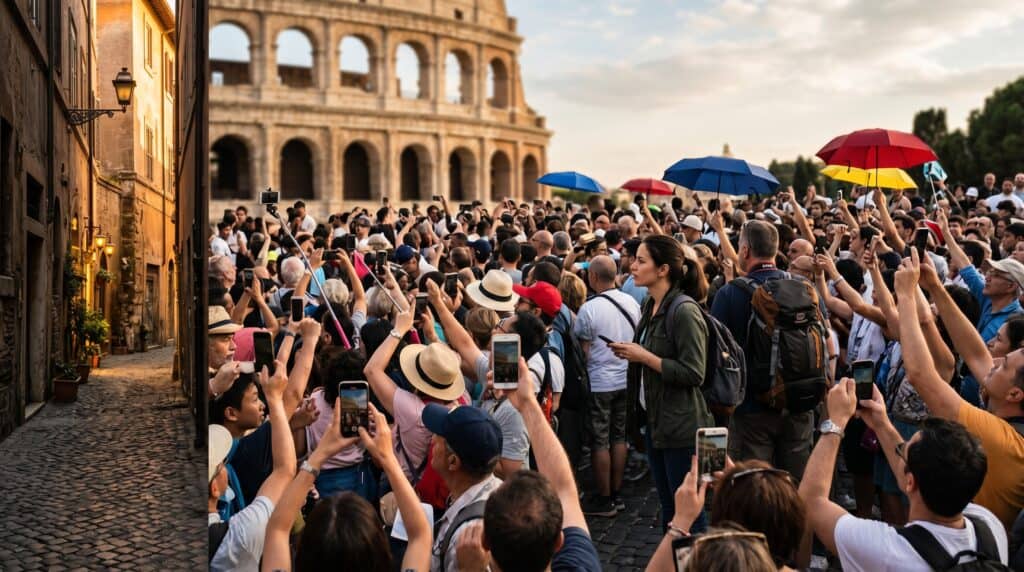
Skip the Mona Lisa as a destination. Yes, go to the Louvre. It's extraordinary. But if your entire visit is focused on standing 10 meters away from a surprisingly small painting with 300 other people holding phones up, you'll miss thousands of genuinely breathtaking works hanging in rooms where you might be nearly alone.
Rethink Santorini in July or August. The photos are real. The crowds are also real. If you're going to Greece on a first trip, Santorini in shoulder season (May or October) is a completely different experience — and half the price.
Be skeptical of "day trips from everywhere." Day trips are sometimes fantastic. But when every travel blog tells you to do a day trip to five different places from the same city, you end up spending every day on a bus. Use your base city. Walk slowly. Eat well.
The Vatican Museums on a Monday without booking. The queues extend around the block. This is easily solved — pre-book online — but it trips up enough people that it's worth saying plainly.

Europe Travel Tips and Tricks You'll Actually Use
The best Europe travel tips and tricks are rarely about attractions. They're about the logistical stuff nobody tells you until you've already made the mistake.
Money, SIMs, and Staying Connected
Most of Europe has shifted heavily toward card payments, including smaller cafés and markets. Contactless works almost everywhere. That said, carry €50–100 in cash for emergencies — some smaller towns, markets, and churches still prefer cash.
For your phone: an international SIM or eSIM is far more practical than roaming on your home plan. European carriers like Airalo or local SIMs in the first country you visit will give you data across the EU at reasonable rates. Most of the Schengen countries share the same data roaming rules, so one SIM often works across multiple countries.
Using a no-foreign-fee credit card (Wise, Revolut, Charles Schwab in the US) for most purchases will save you meaningfully over two or three weeks.
Accommodation Strategy
Where you stay shapes how a trip feels. A few hard-won observations:
- Hostels are not just for backpackers in their 20s. Even travelers in their late 30s and 40s use hostels — especially private rooms in well-reviewed ones — because the social atmosphere and central locations are genuinely hard to beat.
- Central location beats extra square footage. A slightly expensive centrally-located apartment will save you time, transport money, and energy every single day.
- Check where the breakfast situation is. In many European countries, especially Southern Europe, breakfast at a local café is part of the culture and cheaper than hotel breakfast.
- Book refundable rates when possible. Especially for a first trip, flexibility is worth the small premium.
Booking Attractions Without Wasting Half Your Day
Most major European attractions now offer timed-entry booking online. Use it. This is not optional for:
- The Colosseum in Rome
- Uffizi Gallery in Florence
- The Sagrada Família in Barcelona
- Versailles on a weekend
- The Anne Frank House in Amsterdam
At these places, walk-up queues can take two to three hours. A pre-booked time slot usually means walking straight in. This is hours of your trip returned to you.
Best Time to Visit Europe for a First-Timer
The best time to visit Europe depends on what you prioritize: weather, crowds, or cost. They rarely align perfectly.
May and June are the sweet spot for most of Western and Southern Europe. The weather is warm but not brutal, crowds are present but manageable, and many attractions haven't hit peak-summer pricing yet. This is the recommendation most experienced travelers land on.
September and October are arguably even better. School is back, summer tourists have gone home, weather in the south is still beautiful, and you'll often find better accommodation prices. Autumn light in Paris or Prague is genuinely spectacular.
July and August are peak season: hot, crowded, and expensive, especially in coastal areas and popular cities. That doesn't mean you shouldn't go — millions do, and have a wonderful time — but manage expectations around queues, prices, and temperatures.
Winter (November–March) is underrated for cities like Prague, Vienna, Budapest, and Krakow. Christmas markets are magical. Crowds are light. Cold is real but manageable with the right clothing. The beach destinations are a different story — many restaurants and hotels close entirely.

Frequently Asked Questions About Visiting Europe for the First Time
Do I need a visa to visit Europe?
It depends on your passport. Citizens of the US, UK, Canada, Australia, New Zealand, and many other countries can enter the Schengen Area for up to 90 days within any 180-day period without a visa. The EU's ETIAS travel authorization system (similar to the US ESTA) is expected to launch in 2025 for eligible travelers — check current requirements before you book as this situation is evolving.
Is Europe expensive for first-time travelers?
It varies enormously by country and travel style. Western European cities like Paris, Amsterdam, and Zurich are genuinely costly. Central and Eastern European destinations — Budapest, Krakow, Riga, Tbilisi — stretch a budget significantly further. Accommodation and eating like a local (standing at a bar, getting lunch specials) make a major difference to daily spend. Budget travelers can manage €60–80/day in cheaper countries; €100–150/day is more realistic for Western Europe with modest comfort.
Is it safe to travel Europe alone?
Yes, for the most part. Europe consistently ranks among the safest travel destinations in the world. Solo travel here is extremely common — particularly solo female travel. The same common-sense precautions apply anywhere: be aware of your surroundings in crowded tourist areas (pickpocketing exists, especially in Barcelona, Rome, and Prague), don't leave bags unattended, and keep copies of important documents.
Should I buy a Eurail Pass or individual tickets?
If you're doing four or more long-distance train journeys, a Eurail Pass can offer good value plus flexibility. For shorter or more focused itineraries, booking individual tickets directly through national rail sites (SNCF for France, Trenitalia for Italy, Renfe for Spain) tends to be cheaper, especially if you book in advance.
What should I pack for a Europe trip?
Less than you think. European cities involve a lot of walking on cobblestones — bring comfortable shoes that don't look like sneakers if you want to blend in slightly better. A packable rain jacket covers you in Northern Europe. Dress in layers, as temperatures can swing significantly even in summer. Most importantly: if you can't lift your bag into an overhead compartment easily, you've packed too much.
Can I use my phone in Europe?
Yes. US, UK, and Australian phones work in Europe on GSM networks, which is standard. Get an international plan activated before you leave, or pick up a local SIM on arrival. An eSIM is the most convenient option if your phone supports it. Most hotels, cafés, restaurants, and public spaces offer free WiFi as standard.
How much cash should I bring to Europe?
Most of Western Europe is largely cashless, but you should still have €50–100 on hand for small markets, some restaurants, museums in smaller towns, and tipping. Card payment — especially contactless — works in the vast majority of places you'll encounter.
Your First Europe Trip: A Few Last Thoughts
The best Europe travel guide for first timers will always say the same thing in the end: the itinerary matters less than the mindset you bring to it.
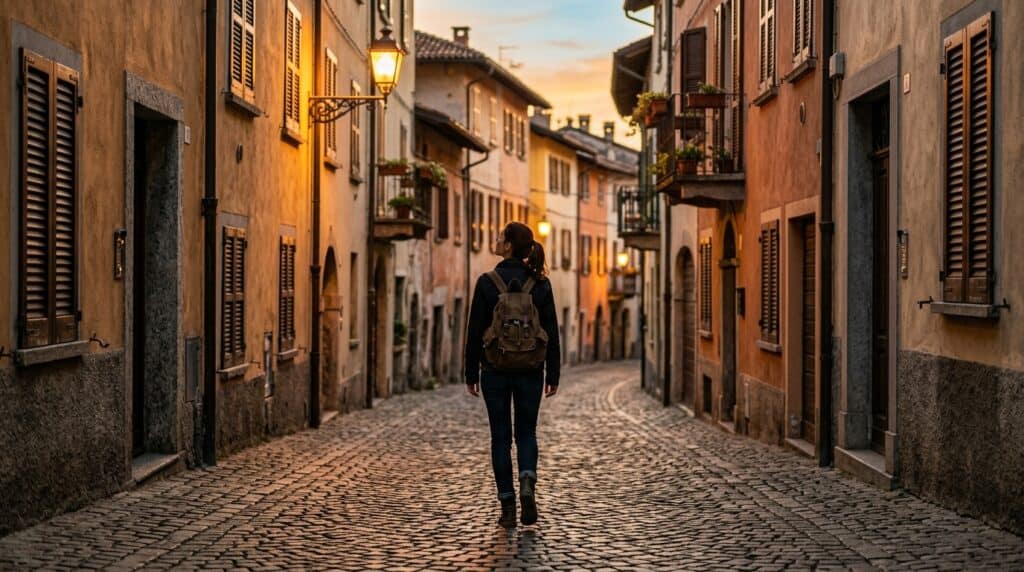
Slow down more than feels comfortable. Eat lunch at 2pm because that's when the locals eat. Walk down streets that have no landmarks on them. Say yes to the recommendation from the person at the next table. Allow yourself to get mildly lost in a neighbourhood you didn't plan to visit.
Europe rewards curiosity over efficiency. The travellers who come back saying it changed them weren't the ones who checked off the most landmarks — they were the ones who stayed long enough in one place to feel it.
Plan well. Then let some of the plan go.
That's where the real trip begins.