
Before You Pack a Single Thing — The Mindset Shift That Changes Everything
Most packing mistakes happen before a single item touches the bag. They happen when you think about packing the wrong way.
The One Rule That Stops Overpacking Forever
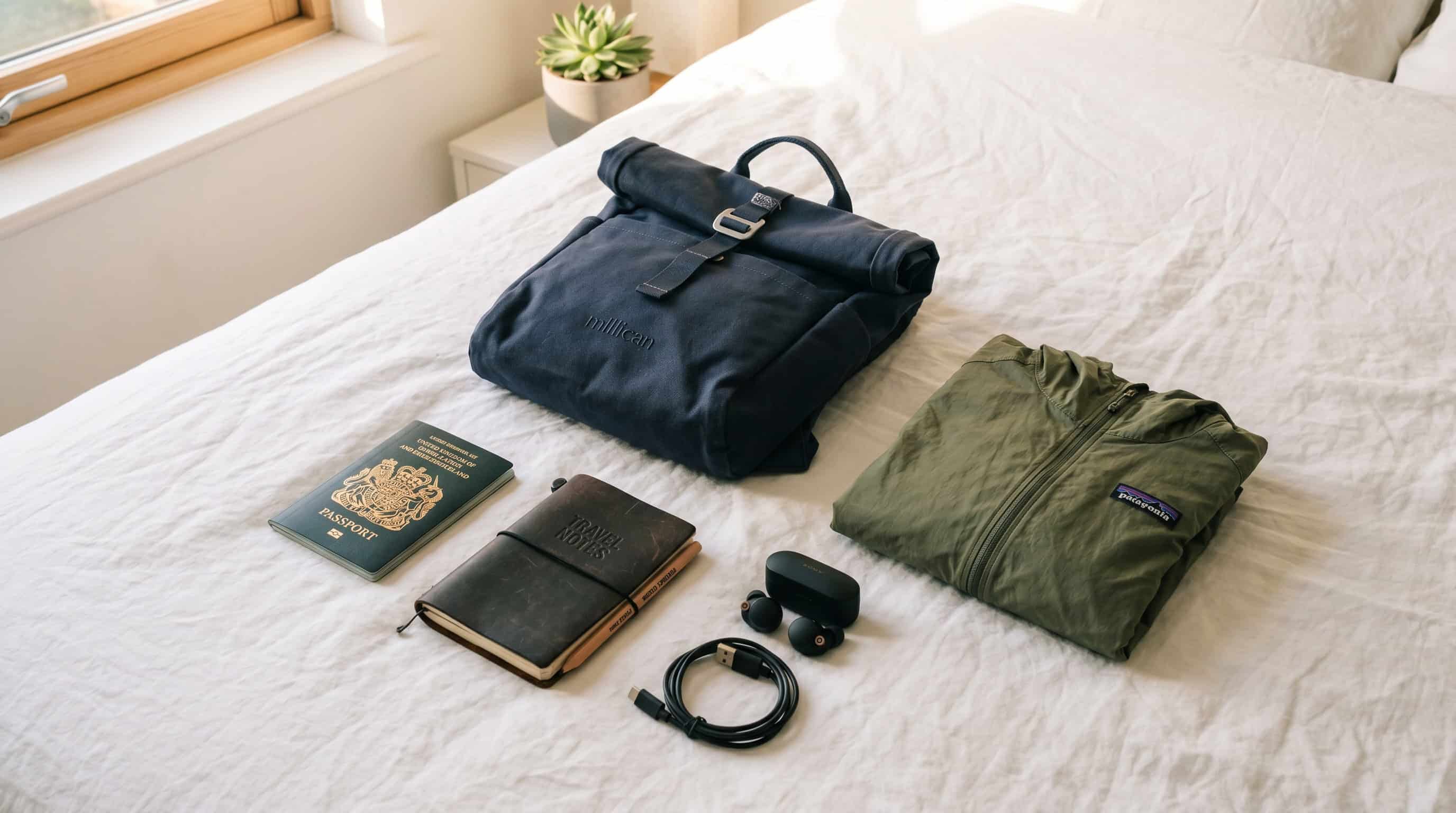
Lay everything out on your bed that you think you need. Now remove a third of it. That’s your packing list.
Sounds brutal. It is. But here’s the thing — in thirty trips, I have never once landed somewhere and wished I’d packed more clothes. I have, however, dragged a bag that left bruises on my shoulder through cobblestone streets in Lisbon, sweated through Rome in August with a 20kg suitcase, and missed a connection in Bangkok because I had to check a bag. Every. Single. Time. the overpack cost me something.
The rule is simple: pack for a week, travel for a month. Laundry exists everywhere. So do shops. You can buy a forgotten item almost anywhere in the world for less than the stress of hauling it.
How to Match Your Packing List to Your Trip Type
Not all trips are equal, and your packing list shouldn’t be either. Before you write a single item down, answer these three questions:
- How many nights? Under 5 nights = carry-on only, no exceptions.
- How many climates? One climate = pack for that climate. Multiple = pick a neutral base and layer.
- What’s the laundry situation? Hotel with laundry service, Airbnb with a washing machine, or backpacker hostels where you handwash in a sink?
Your answers dictate almost everything that follows. Someone doing a 3-night city break in Amsterdam needs a completely different list from someone doing a 3-week overland trip through Southeast Asia — even though the skeleton of travel packing list essentials stays the same.
Travel Packing List Essentials — Documents & Money
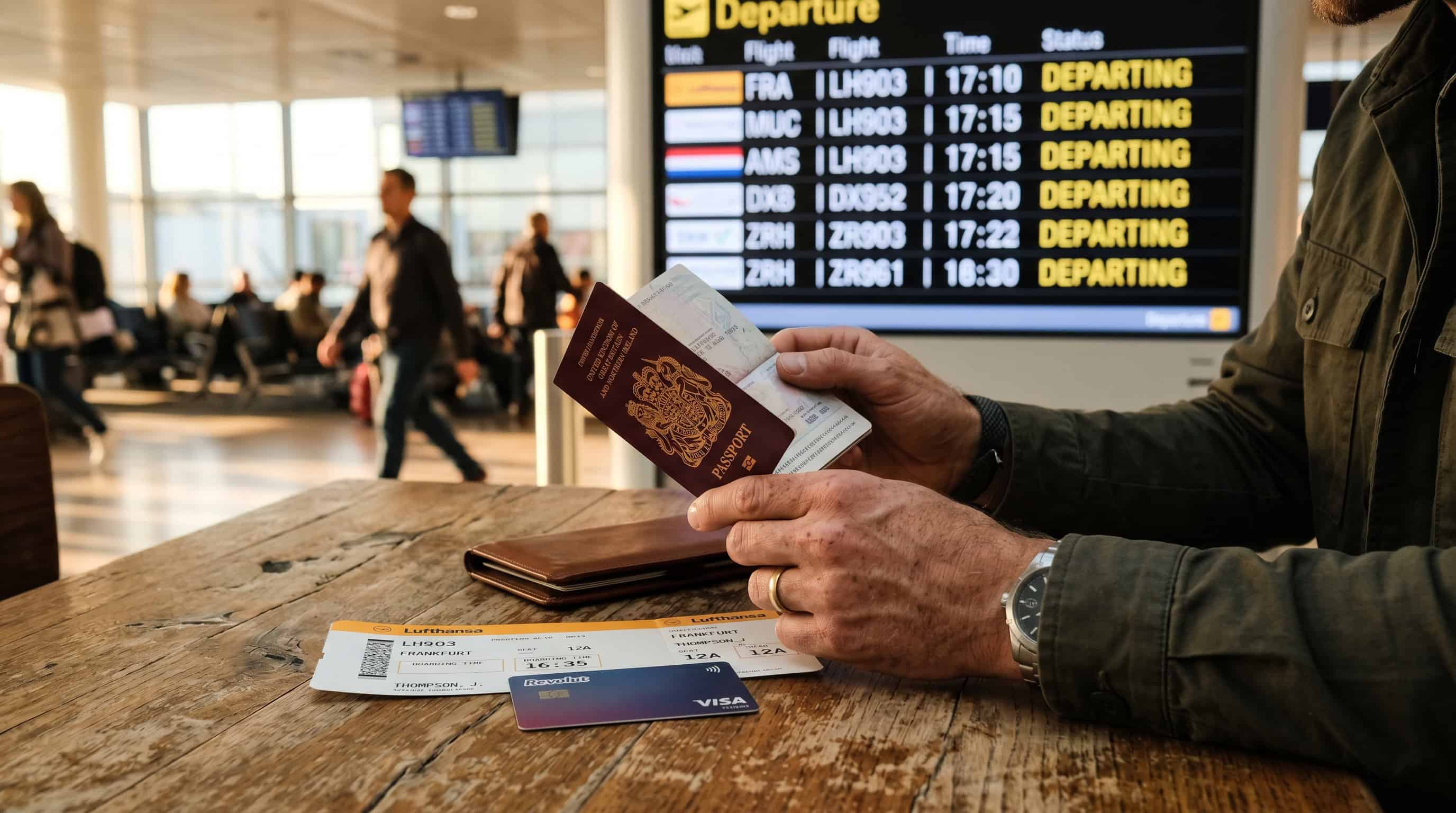
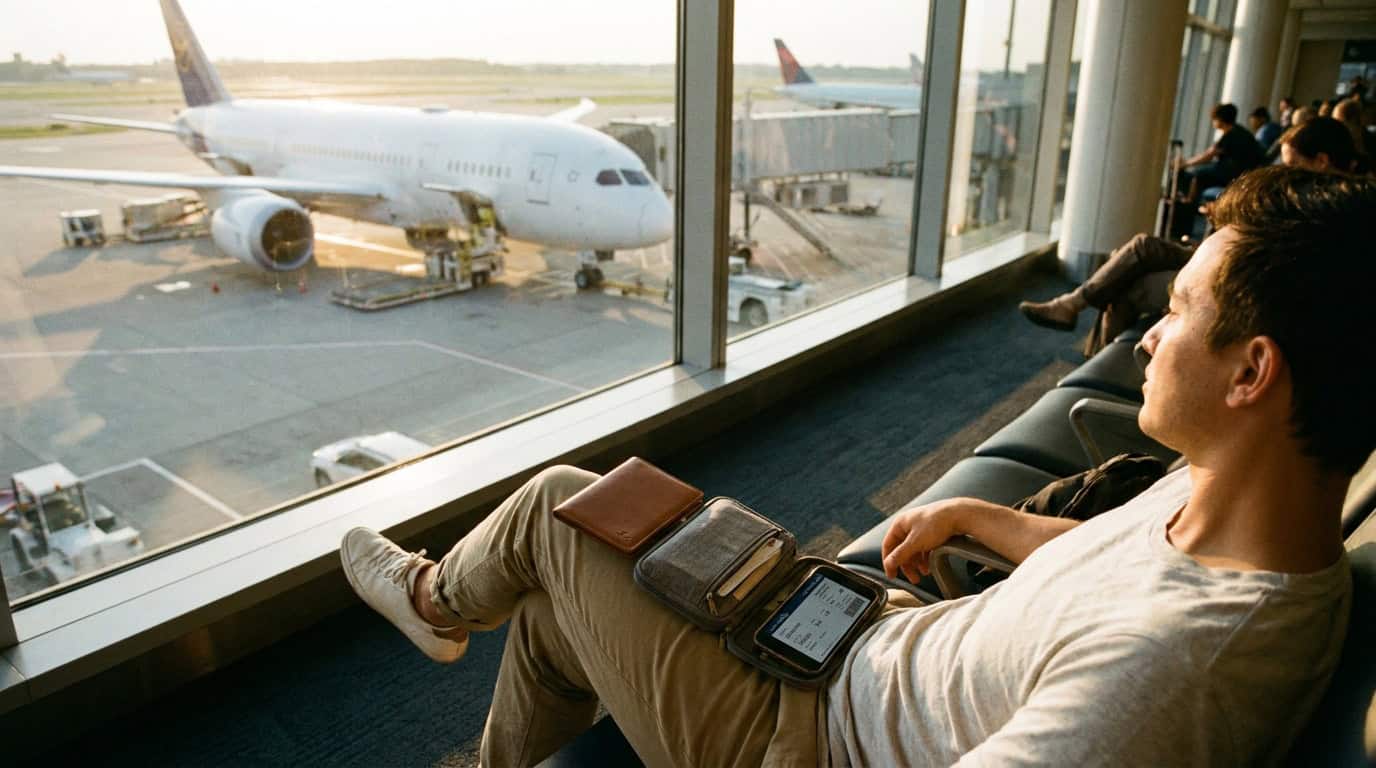
Lose your bag and you’re annoyed. Lose your documents and you’re stuck. Documents and money are the non-negotiables, and they deserve their own section because most people treat them as an afterthought.
Physical Documents You Must Carry
At minimum, carry:
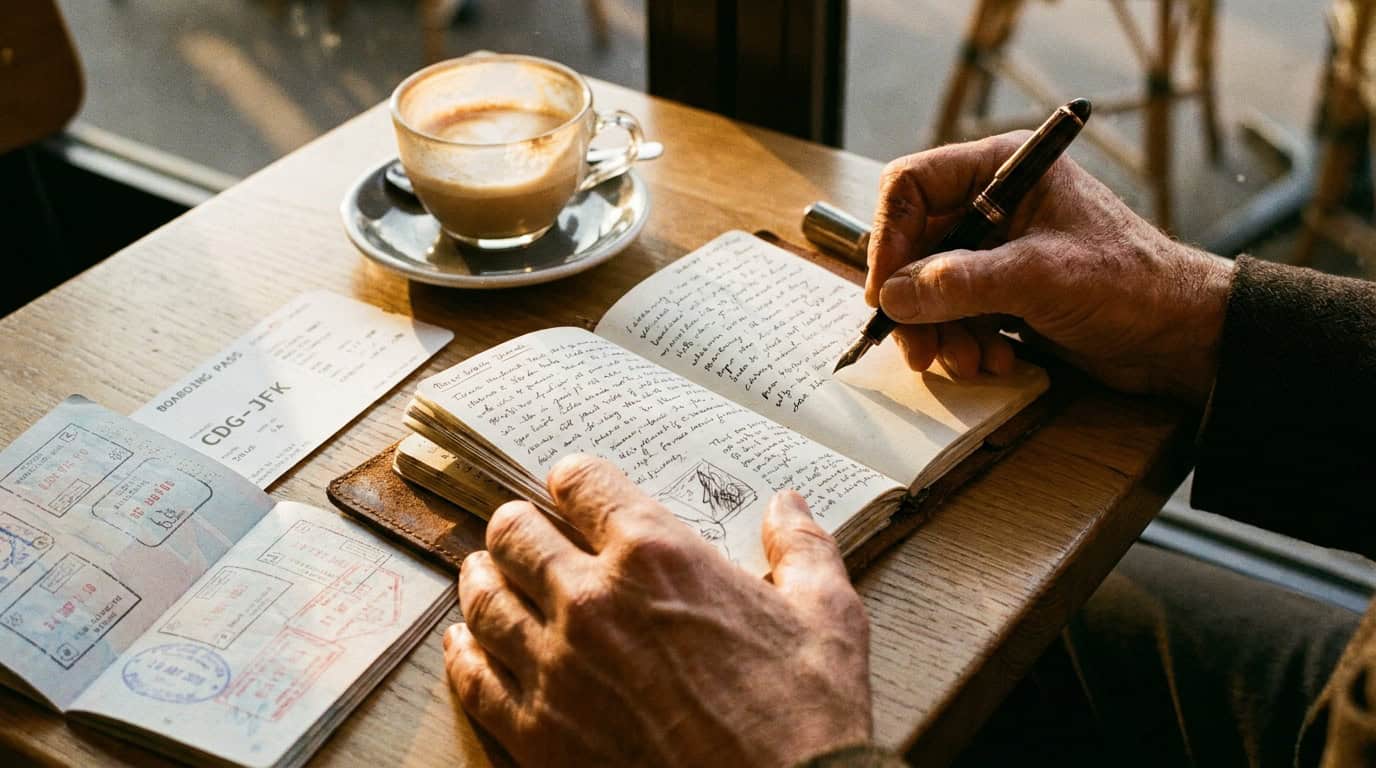
- Passport (check the expiry date — many countries require 6 months’ validity beyond your travel dates)
- Visa (printed if required; screenshot if digital)
- Travel insurance documents — policy number and 24-hour emergency line on a separate card
- Driving licence (if renting a car, and check if you need an International Driving Permit)
- Emergency contact card — old-fashioned, yes, but if your phone dies, this card works
Keep originals on your person, not in your checked bag. A money belt or neck wallet that sits under your clothing is worth every penny.
Digital Backups and Apps
Before every trip, email yourself scans of your passport, visa, and insurance policy. Store them in Google Drive or Dropbox too — accessible from any device, anywhere. This has bailed me out exactly once (a pickpocketing incident in Barcelona) and that one time was worth every second of preparation.
Key apps for your international travel checklist:
- Google Maps offline — download maps before you arrive, especially for areas with patchy data
- XE Currency — real-time exchange rates without needing wifi once loaded
- Your bank app — notify your bank before travel to avoid card freezes
- The airline/train app for your bookings
Clothing — The Carry-On Packing Essentials That Actually Work
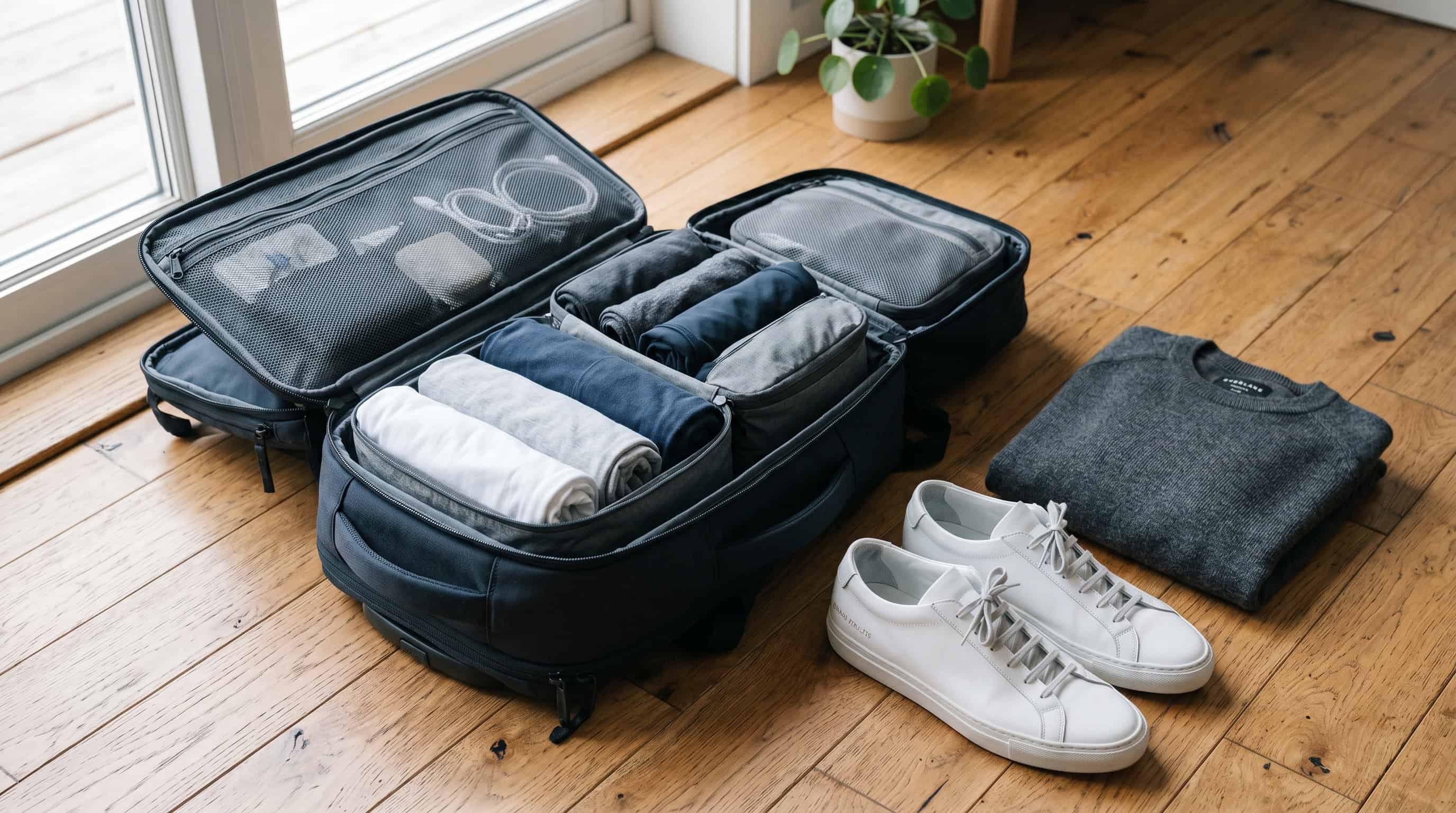
Clothing is where most bags explode in size. And it’s almost always unnecessary. The carry-on packing essentials for clothing come down to one concept: the capsule wardrobe.
The Capsule Wardrobe Formula for Any Climate
The formula is 3-4-2: three bottoms, four tops, two layers.
- 3 bottoms: One pair of versatile trousers/jeans, one pair of shorts or a skirt, one pair of comfortable walking trousers (or a second pair of jeans if you prefer)
- 4 tops: Two neutral t-shirts or shirts, one slightly smarter top for evenings, one athletic or moisture-wicking top
- 2 layers: One light packable jacket or hoodie, one warmer layer if your destination calls for it (a merino wool zip or a thin down jacket)
Add a set of gym/lounge wear that doubles as pyjamas and you’re sorted for two weeks with access to a laundry service — or one week if you’re handwashing.
For shoes, the golden rule is three pairs maximum: walking shoes (do most of the work), sandals or flip-flops, and one smarter pair for evenings. Wear the heaviest pair on travel days.
Fabrics That Travel Well (and Ones That Don’t)
This genuinely matters more than most guides admit.
Pack these:
- Merino wool — temperature-regulating, naturally odour-resistant, packs small. Yes, it’s expensive. Yes, it’s worth it.
- Synthetic blends (polyester/nylon) — quick-dry, lightweight, holds colour well
- Linen — breathable in heat, wrinkles but who cares when you’re on holiday
Leave these at home:
- 100% cotton — holds moisture, takes forever to dry, gets heavy when damp
- Heavy denim — one pair is fine; two is punishing your future self
- Formal suits/dresses unless the trip genuinely requires them
Toiletries and Health — Your Travel Toiletries Checklist
Here’s where most people pack far more than they need. Your travel toiletries checklist does not need to mirror your bathroom cabinet.
TSA-Friendly Liquids and Solid Alternatives
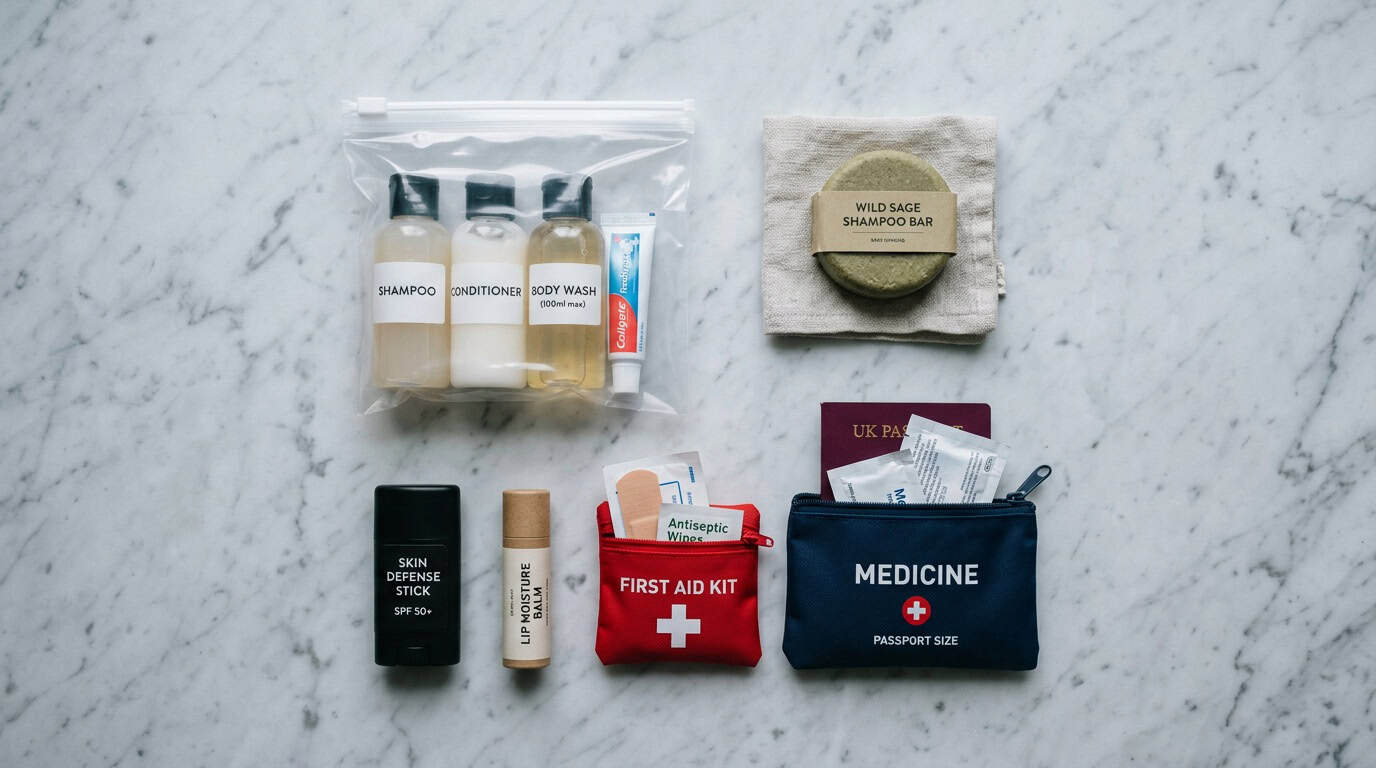
The 100ml / 1-litre bag rule applies on most international flights. What most people don’t realise is that solid alternatives now cover almost everything:
- Shampoo and conditioner bars — last longer than bottles, work brilliantly, zero liquid hassle
- Solid sunscreen sticks — a game-changer for beach trips
- Solid body wash or soap bar
For liquids you genuinely need in liquid form, buy empty 50–100ml travel bottles and decant. Don’t pack full-size products unless you’re checking a bag and the trip is longer than 10 days.
The basic toiletries list:
- Toothbrush and toothpaste (small tube)
- Shampoo / conditioner (bar or decanted)
- Body wash (bar or decanted)
- Deodorant (travel size or solid stick)
- Facial SPF and moisturiser
- Razor
- Lip balm with SPF
The Medicine Kit That’s Saved Me on Four Continents
A small ziplock bag. That’s all it needs to be. Inside:
- Paracetamol / ibuprofen
- Antihistamine (allergies, insect bites, reactions)
- Rehydration sachets (stomach issues hit at the worst times)
- Imodium or equivalent
- Plasters and blister pads (feet never lie)
- Any prescription medication, with the prescription document
- Hand sanitiser (small bottle)
This kit weighs almost nothing. I’ve used every single item on this list on at least one trip.
Tech, Gadgets, and Best Travel Accessories
Packing light doesn’t mean packing dumb. A handful of the right tech items make travel genuinely easier — but the list of best travel accessories is shorter than the internet would have you believe.
Power and Connectivity Essentials
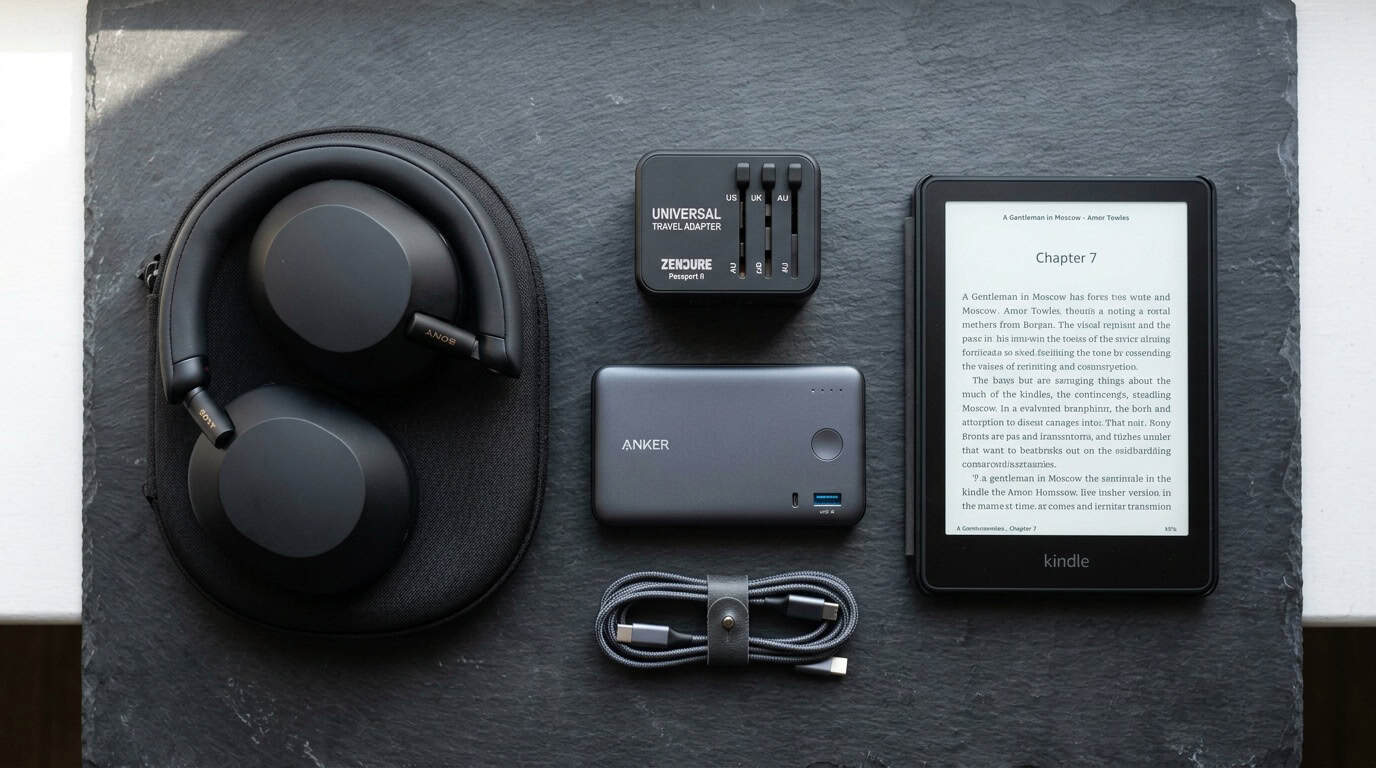
- Universal travel adapter — one universal plug adapter covers most destinations; don’t bring country-specific ones unless you know you need them
- Power bank (20,000mAh or similar) — a full-size power bank charges your phone multiple times; on long travel days it’s non-negotiable
- Charging cables — one USB-C cable handles most modern devices; bring a lightning/30-pin cable only if needed
- Laptop / tablet — bring only if you actually need to work; a phone handles most travel tasks
The Gadgets Worth the Bag Space (and the Ones That Aren’t)
Worth it:
- Noise-cancelling headphones — long-haul flights are a different experience
- E-reader (Kindle or similar) — replaces a stack of books with almost no weight
- Small travel lock — for hostel lockers, zipped bags, hotel rooms
Not worth it (for most trips):
- Travel hairdryer — most hotels provide one; pack a travel-size only for specific itineraries
- Camera with multiple lenses — unless you’re a serious photographer, a modern smartphone does the job
- Tablet and laptop — pick one or neither
For the best travel backpacks for carry-on travel, it’s worth choosing a bag with a dedicated laptop sleeve and external water bottle pocket to keep everything accessible without unpacking.
Packing Light Tips — How to Fit It All in One Bag
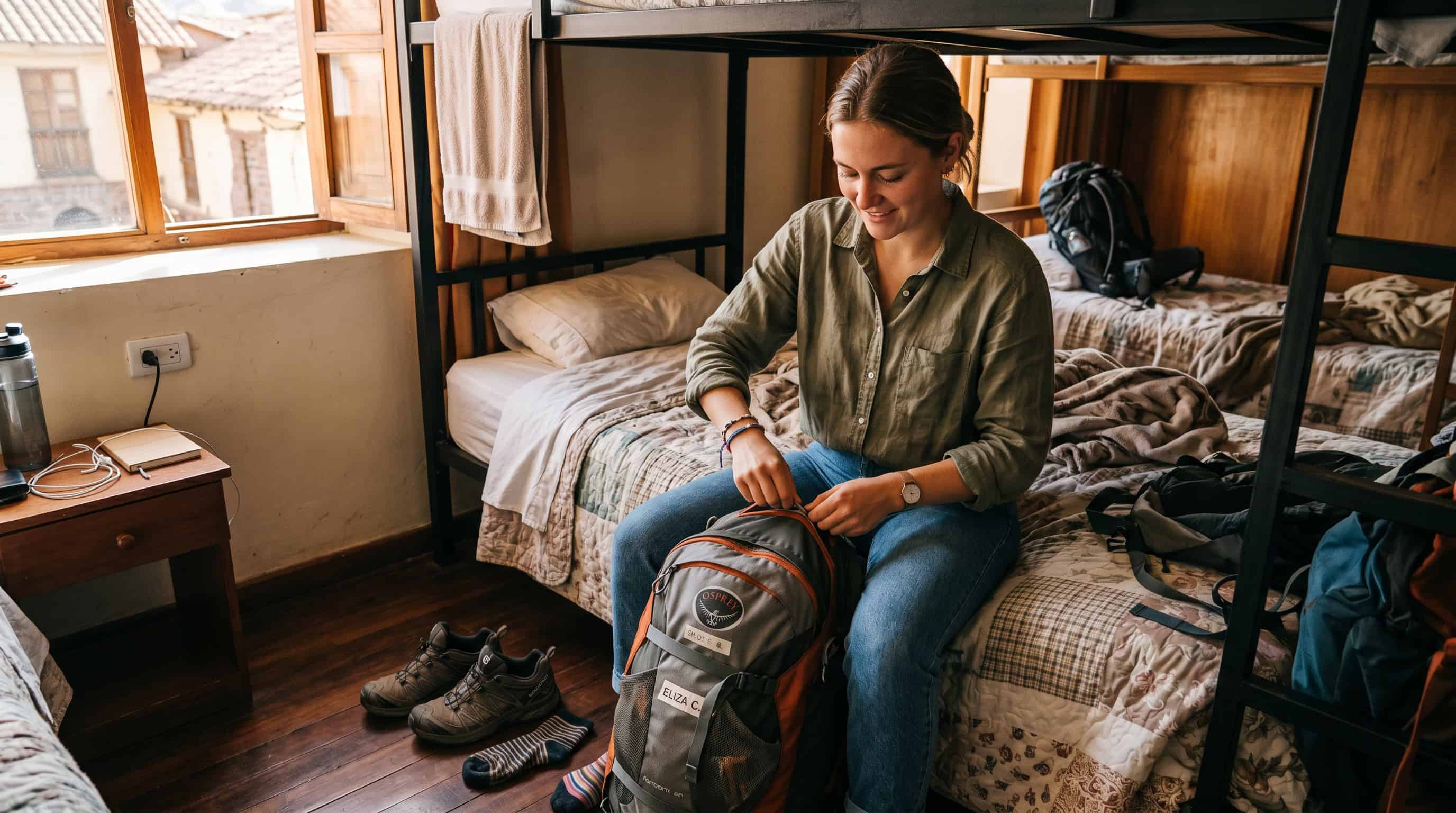
You’ve got the right items. Now the question is how to actually get them into your bag without it looking like a crime scene.
The Roll-vs-Fold Debate (Settled)
Roll everything soft. Fold only structured items that crease easily (like a blazer). Rolling compresses clothing better, reduces wrinkles in most fabrics, and lets you see everything at a glance in the bag.
Exception: merino wool sweaters and structured shirts fold better than they roll.
Packing Cubes and Compression — What Actually Works
Packing cubes changed how I travel. They’re not magic space-creators — they don’t compress clothing beyond its natural size — but they organise everything in a way that means you never excavate your entire bag to find a single sock.
A basic setup:
- Large cube: Clothes
- Medium cube: Toiletries and health kit
- Small cube or pouch: Tech cables, adapter, chargers
- Flat pouch: Documents
Compression packing cubes (with double zips) do save space — roughly 30% compression on soft fabrics — and are worth the upgrade if you’re doing carry-on only trips regularly.
One more packing light tip that nobody talks about enough: wear your bulkiest items on travel day. Boots, heavy jacket, hoodie — all on your body. Your bag thanks you.
The International Travel Checklist — What Most Lists Miss
The clothing and toiletries get all the attention. But experienced travellers know it’s the administrative stuff that causes the most grief when it goes wrong.
Visa, Insurance, and Emergency Info
- Check your visa requirements at least 6 weeks before travel — some visas take time to process
- Purchase travel insurance that actually covers you before your trip begins, not at the airport
- Note your blood type, allergies, and any medications on a card in your wallet
- Save the local emergency number for your destination (it’s not always 999 or 911)
- Register with your country’s embassy if travelling to higher-risk destinations — this is free and takes five minutes
Climate and Cultural Considerations
- Conservative dress destinations: Pack a light scarf or sarong. It weighs nothing and gets you into temples, mosques, and conservative areas without issue.
- Extreme heat: Prioritise loose, breathable fabrics. Dark colours absorb heat — pack lighter tones.
- Cold climates: Layering is the answer, not one massive coat. Three thin layers beat one thick one every time.
- Rainy seasons: A lightweight packable rain poncho weighs less than 100g and saves you when caught in a downpour. Umbrellas are fine but take up bag space.
For family travel packing tips on long-haul flights, the same principles apply — just multiplied. Matching packing cubes per person means bags are a system, not a gamble.
FAQ — Your Packing Questions Answered
How many outfits should I pack for a 2-week trip?
Seven to eight is plenty for a two-week trip if you have access to laundry mid-trip. With laundry every 4–5 days, you can comfortably do two weeks in carry-on only luggage.
What are the true essentials that every traveller should pack?
Passport and copies, travel insurance documents, universal adapter, power bank, rehydration sachets and basic meds, merino wool base layers, and a packing cube system. Everything else adapts to your destination.
Can I really travel for two weeks with only a carry-on bag?
Yes — millions of people do it. The key is choosing the right bag (usually 40–45L), committing to the capsule wardrobe formula, and accepting that you’ll do one laundry run. Most airlines’ carry-on limits comfortably fit a week’s clothing plus essentials.
What should I always keep in my personal item / day bag?
Phone, wallet, passport, travel insurance card, power bank, headphones, any medication you might need mid-flight, a change of clothes if your main bag is checked, and a reusable water bottle.
What do most travellers forget to pack?
The most commonly forgotten items are: a travel adapter, copies of important documents, basic medications, a reusable bag (invaluable for markets and shopping), and a portable charger. A sarong or light scarf is another one people regret not having.
Is travel insurance really necessary?
Yes — unequivocally. A single medical evacuation abroad can cost tens of thousands. Even for short trips, travel insurance is one of the cheapest and most important things you can buy. Don’t skip it.
How do I pack for multiple climates in one trip?
Choose a neutral, layer-able base. Merino wool items work in warm and cool weather. A packable down jacket adds warmth for cold days without the bulk. Pack for the coldest climate and remove layers for warmer ones — don’t pack separately for each.
The List That Actually Travels With You
After thirty countries, the truth about travel packing list essentials is this: less is almost always more. Every experienced traveller you meet has a smaller bag than you’d expect. That’s not minimalism for its own sake — it’s freedom. The freedom to move fast, hop on buses, explore without a storage locker, and not stand at the airline check-in desk wondering if your bag makes weight.
Come back to these travel packing list essentials every time you plan a trip. Edit the list for your destination. Remove anything you haven’t used in the last two trips. Over time, your packing gets sharper, lighter, and more intuitive.
The best packing list is the one that means you arrive somewhere excited, not exhausted. That’s what this one is built to do.
Daniel Reyes has visited 30 countries across six continents, specialising in family travel and adventure trips. He writes regularly for Holiday Vistas.