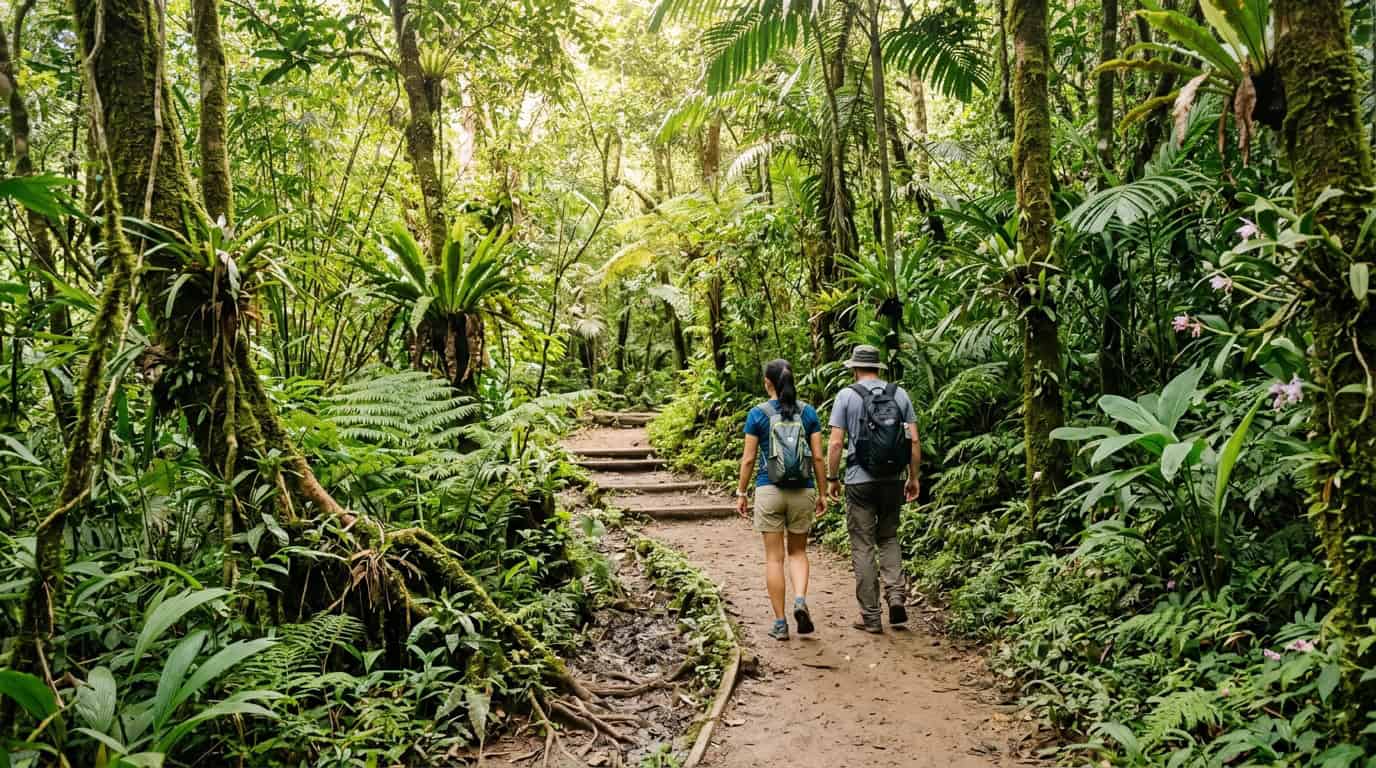
Summer trails punish the wrong shirt fast. On an open route with little shade, your clothes decide how much sun reaches your skin, how well sweat cools you and how soon your feet blister. This guide covers what to wear hiking in the summer layer by layer, from fabric and fit to hats, socks and the wet-bandana trick. Each choice is checked against official heat and sun guidance from the National Weather Service, the CDC and the National Park Service, and a worked outfit shows how it fits a real summer day hike at Grand Canyon.
Clothing buys margin, not immunity. The last section covers timing and the heat warning signs that matter more than any gear choice.
What to Wear Hiking in the Summer: Loose, Light-Colored Layers Beat Bare Skin
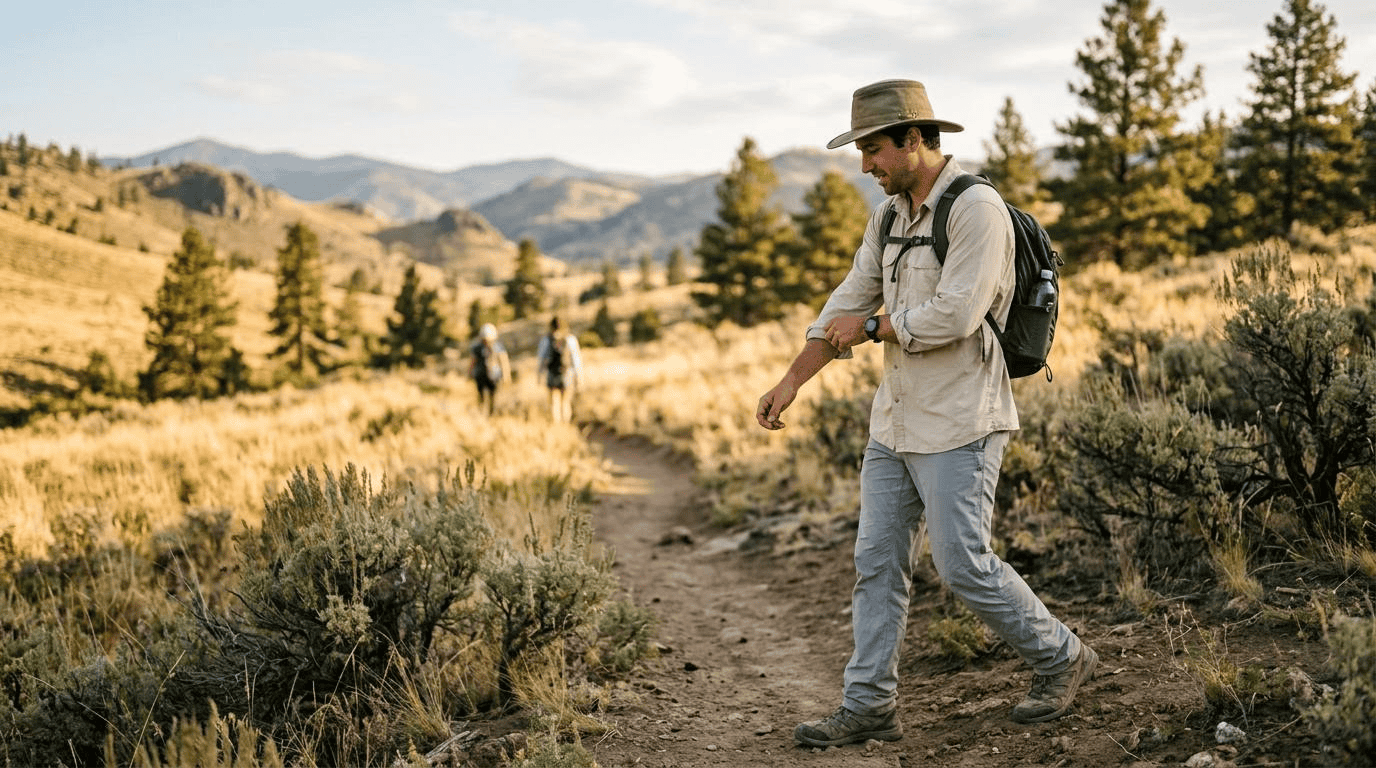
Instinct says strip down when it gets hot. On a shaded forest loop that works. On an exposed trail, bare skin takes the full sun load, and you trade a slightly cooler first hour for sunburn and a faster rise in body heat later. The National Weather Service tells people active outdoors in heat to wear lightweight, loose-fitting, light-colored clothing because it reflects heat and sunlight. Those three ideas, light, loose and pale, are the full brief for summer hiking clothes.
Shirts: fit first, fabric second
A shirt that hangs off your shoulders lets air move between fabric and skin. A tight compression top holds sweat against you and heats up in direct sun. Look for a loose long-sleeve sun shirt or a vented button-up with a collar you can flip up to cover your neck.
- Polyester or nylon: dries fastest, weighs least and costs least. It holds odor after a long day.
- Lightweight merino wool: resists odor and stays comfortable when damp. It costs more and wears thin faster.
- Cotton: soft when dry, slow to dry once soaked. Useful only in very dry heat, as the next section explains.
- Vents: mesh back panels and underarm vents help on long climbs, when you sweat most.
Shorts or pants: pick by trail, not by temperature
Shorts move more air but leave your legs open to sun, brush and ticks. Thin nylon hiking pants block all three and still breathe. Choose by the ground you will cross:
- Open desert, alpine or ridge trails with strong sun: lightweight pants.
- Shaded forest paths with clear tread: shorts or a skort.
- Tall grass or tick country: pants, tucked into your socks.
- Mixed terrain: convertible zip-off pants, so you switch without stopping long.
Underwear and sports bras
Base pieces cause more misery than shirts. Pick synthetic or merino underwear and a quick-dry sports bra with flat seams. Cotton underwear stays wet for hours and chafes on long climbs, and chafing gets worse with every mile in heat.
Carry one light layer for the edges of the day
A summer dawn start often feels cool, especially in deserts and at elevation, where the air loses heat overnight. Pack a thin wind shirt or a light fleece for the first hour and the walk back to the car after sunset. It weighs little, stuffs into a hip pocket and saves you from starting the day in a sweat-soaked shirt worn too early. Take it off before you warm up, not after, so your sun shirt stays dry for the hot hours.
Humidity, Not Temperature, Decides Which Fabric Works
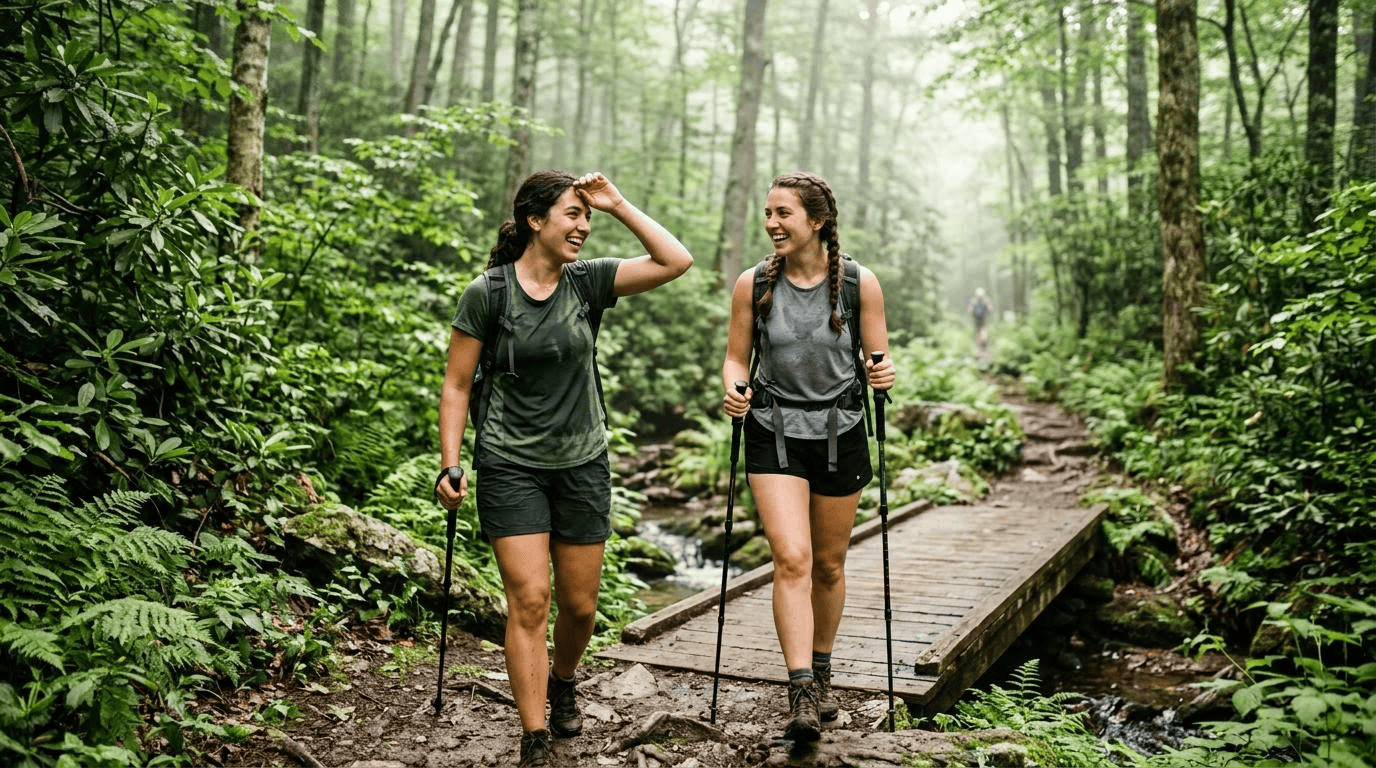
Sweat cools you only when it evaporates. In dry desert air it evaporates almost at once, so a fabric that holds a little moisture against your skin keeps cooling you longer. In humid heat, think of an eastern forest in July, sweat sits on your skin, and a fabric that holds water only gets heavier and rubs.
- Dry heat (desert Southwest, high plains): loose long sleeves, light colors, and a synthetic or cotton-blend shirt you may wet down. Priority: sun cover.
- Humid heat (eastern forests, the tropics): the thinnest quick-dry synthetic you own, mesh panels, shorts where brush allows and a spare pair of socks. Priority: fast drying and chafe control.
- Mountain summer (high elevation): a sun shirt plus a light wind layer and a rain shell, because temperatures drop as you climb and afternoon storms roll in fast.
The insight most packing lists miss: cotton earned its bad name on cold, wet hikes, where wet fabric chills you. In dry summer heat that same chilling effect is the point. A cotton-blend shirt is a fair choice for a short desert hike, as long as the route stays low and you finish before evening cools the air. In humid heat or on a high mountain, leave it at home.
Hiking abroad works the same way. Tropical trails such as the ones in the Holiday Vistas guide to the best hiking trails in Asia call for the humid-heat kit, while high treks there need the mountain kit.
Full Sun Cover Protects Better Than Sunscreen Alone
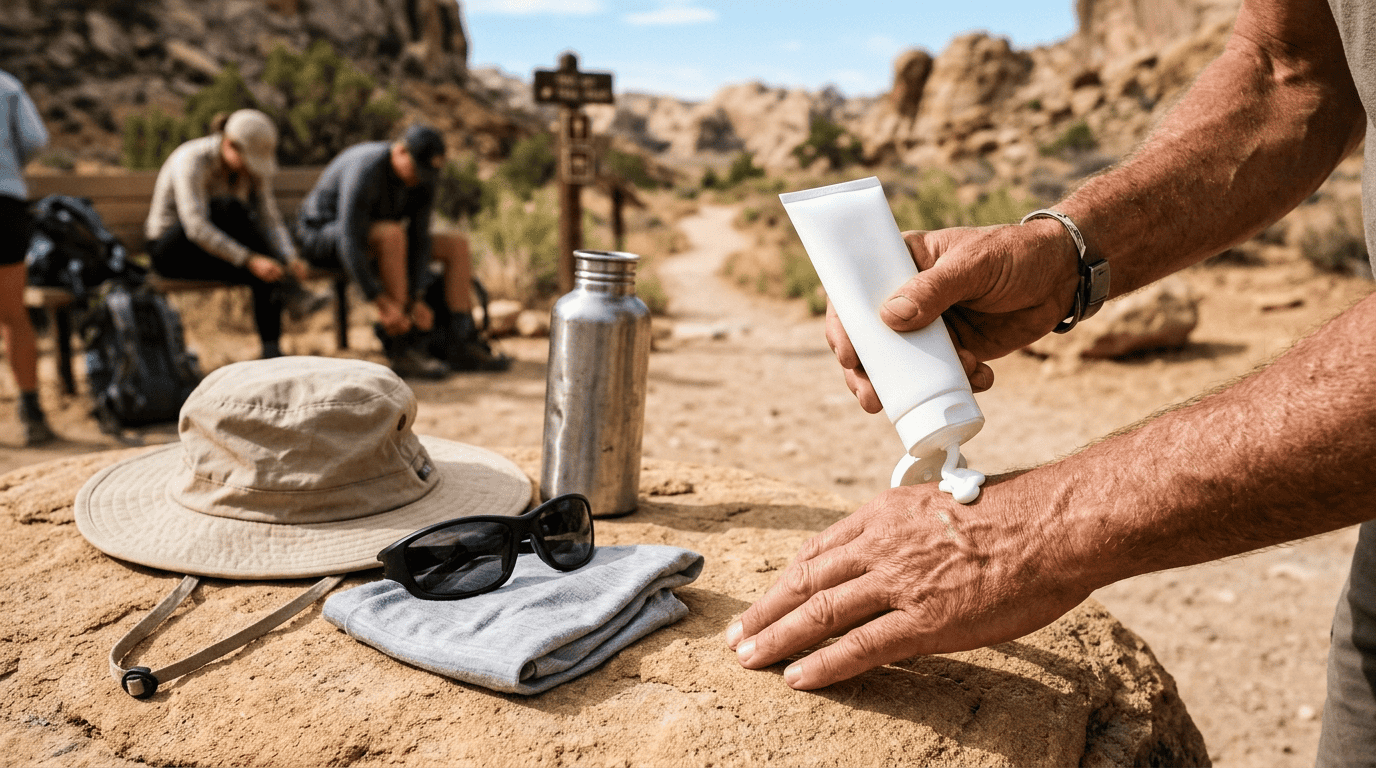
Sweat washes sunscreen off, and most hikers never reapply enough. Clothing does not wear off. CDC sun safety guidance recommends long sleeves and long pants where practical, notes that tightly woven fabric protects best, and points out that dry fabric protects better than wet fabric. For the skin you leave bare, it advises a broad-spectrum sunscreen of SPF 15 or higher, reapplied after 2 hours outdoors and after sweating or toweling off.
Hat
A wide brim shades your face, ears and neck in one piece. The CDC favors a tightly woven fabric such as canvas and warns against straw hats with holes, which let sun through. A cap with a rear neck flap works if a wide brim catches the wind on ridges. A mesh band around the crown lets heat escape from your head.
Sunglasses, gaiter and gloves
Choose sunglasses that block UVA and UVB rays. The CDC notes that wraparound frames work best, because they stop light from the sides. A thin neck gaiter covers the back of your neck and doubles as a cooling cloth. Light sun gloves protect the backs of your hands on trekking poles, a spot most people forget to cover with sunscreen.
| Item | What to choose | Why it matters |
|---|---|---|
| Hat | Wide brim, tightly woven fabric | Shades face, ears and neck. Straw with holes lets sun through. |
| Shirt and pants | Long, loose, light-colored, tightly woven | Reflects heat and sunlight and blocks UV better than bare skin |
| Sunscreen | Broad spectrum, SPF 15 or higher | Reapply after 2 hours and after sweating |
| Sunglasses | UVA and UVB blocking, wraparound frame | Blocks side glare on open trails |
| Timing | Hike exposed sections before 10 a.m. or after 4 p.m. | UV rays peak from 10 a.m. to 4 p.m. daylight saving time |
Source: CDC Sun Safety and National Weather Service heat safety guidance
Check the UV Index in your weather app before you leave. The CDC advises protecting your skin whenever the index reads 3 or higher, which covers most summer days on most trails.
Pale versus dark fabric
Some darker, denser fabrics block more UV, but they also absorb more heat from direct sun. On a hot, exposed trail, a pale, tightly woven fabric gives the better balance: it reflects heat as the National Weather Service advises, and the tight weave does the UV work. Hold a shirt up to a bright window before you buy it. If you see light pouring through the weave, sun will pour through it on the trail too.
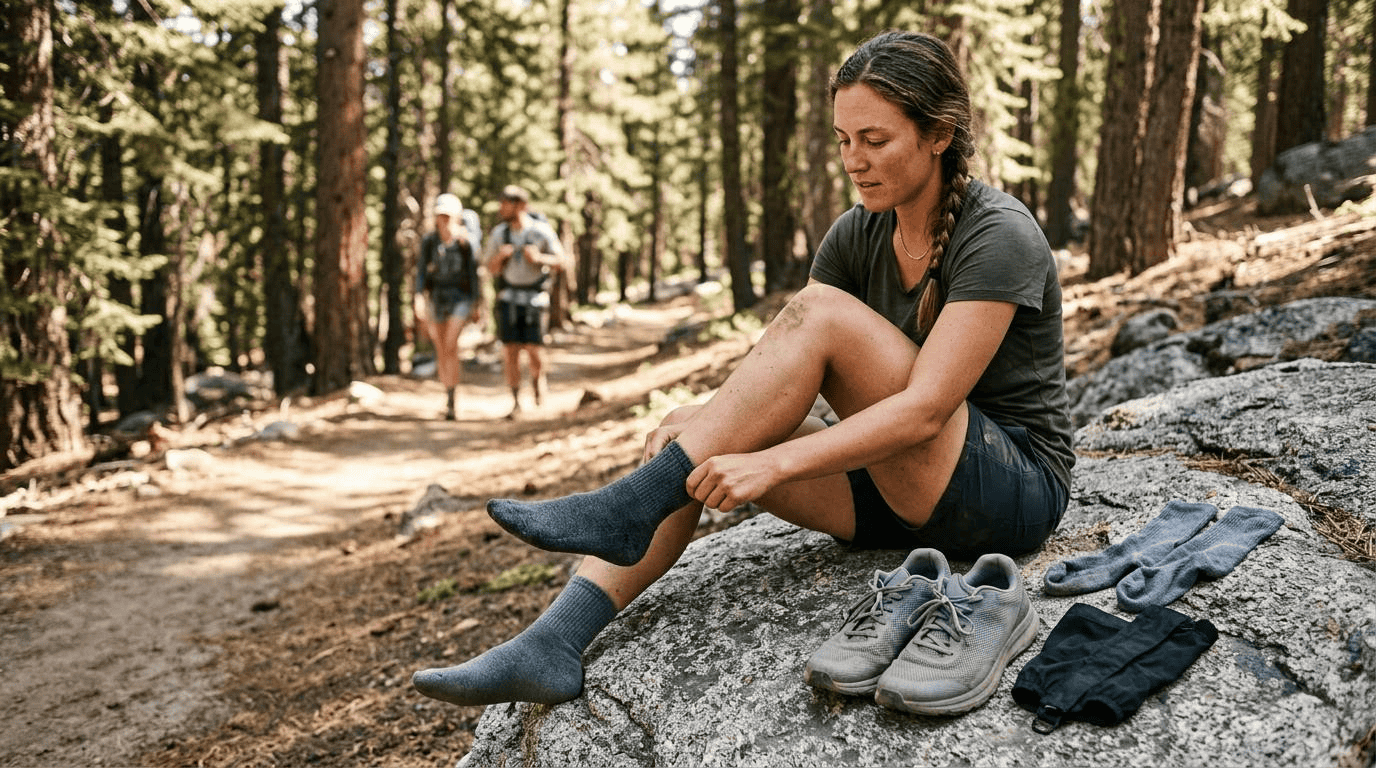
Your Feet Fail First in Summer Heat, So Socks and Shoes Matter Most
Hot feet swell and sweat. Wet skin plus friction is the recipe for blisters, and a blister ends more summer hikes than sunburn does. Treat your feet as the weak link in your summer outfit.
- Socks: synthetic or merino with light cushioning. Never cotton. Carry a dry spare pair and swap at lunch, even on a day hike.
- Shoes: breathable trail runners or mesh hiking shoes suit maintained trails. Heavy waterproof boots trap heat, and the waterproof layer keeps sweat in. Save boots for loose, rocky ground where you want ankle support.
- Fit: leave room at the toes for afternoon swelling and steep descents, where your foot slides forward.
- Gaiters: low trail gaiters keep sand and grit out on dusty desert paths, and grit inside a sock rubs like sandpaper.
At each long break, take your shoes off for five minutes. Air-dried feet hold out far longer than feet that stay laced in damp socks from start to finish.
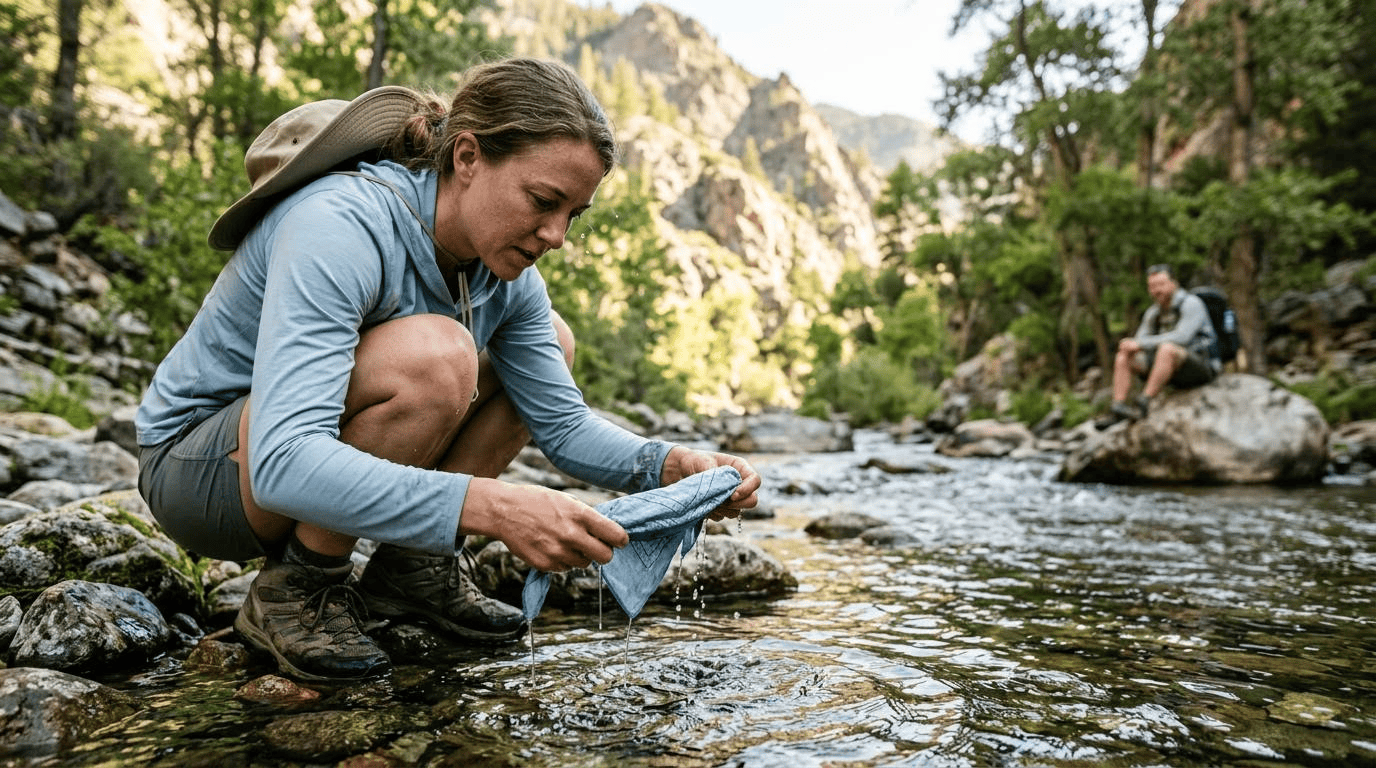
A Wet Bandana Cools You, but a Wet Shirt Costs Sun Protection
Soaking fabric with cool water is a standard way to bring body heat down. CDC heat illness first aid guidance lists wetting the skin, placing cold wet cloths on the head and neck, and soaking clothing with cool water among the steps for cooling someone fast. Hikers borrow the same idea before trouble starts.
Here is the catch. The CDC sun guidance also notes that dry fabric blocks more UV than wet fabric. A soaked shirt cools your torso but lets more sun through to your shoulders. The fix is to wet the pieces that do the most cooling and cost the least protection:
- Dip a bandana or cooling towel at every stream and tie it loosely around your neck.
- Wet the inside band of your hat, where the brim still shades your face.
- Wring fabric until damp, not dripping, so water does not run into your socks.
- If you soak your shirt on an exposed stretch, reapply sunscreen on your shoulders and neck.
One rule overrides the trick. On a trail with no water source, your drinking water comes first. Pour it on fabric only when you carry a clear surplus, and never when the climb out still lies ahead.
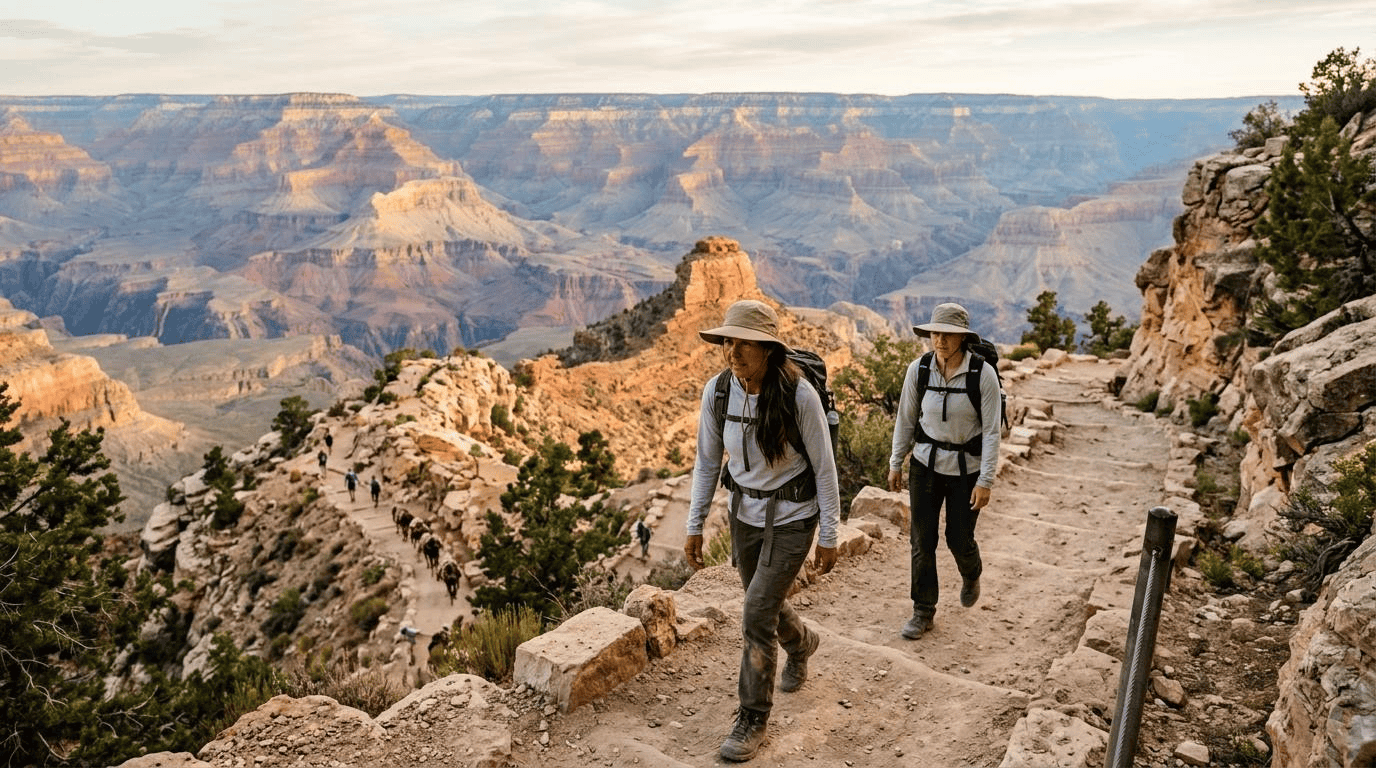
A Summer Outfit for the South Kaibab Trail to Cedar Ridge
Theory gets easier with a real route. Grand Canyon's South Kaibab Trail starts south of Yaki Point on the South Rim and is reached by park shuttle. The National Park Service lists Cedar Ridge at 3 miles (4.8 km) round trip, with 1,120 feet (340 m) of elevation change and 2 to 4 hours of walking. The same page says the trail has little shade and no water, that summer temperatures in the shade routinely pass 100°F (38°C), and that the park advises avoiding hiking between 10 a.m. and 4 p.m. Details checked on 25 November 2026.
Trail facts
- Difficulty: moderate (steep, with the climb on the return)
- Distance: 4.8 km (3 miles) round trip to Cedar Ridge
- Starting point: South Kaibab Trailhead, south of Yaki Point, shuttle access only
- Check before you go: Grand Canyon National Park, National Park Service
Check before you travel: On 25 November 2026 the National Park Service reported the trailhead water supply off because of a pipeline break. Confirm water status, shuttle times and any heat warnings with Grand Canyon National Park before you go, and carry all the water you need from the start.
For a 6 a.m. start in July, the outfit looks like this:
- A loose, light-colored long-sleeve sun shirt in quick-dry fabric.
- Lightweight nylon pants, or shorts with sunscreen reapplied at Cedar Ridge.
- A wide-brim hat with a chin strap for wind on the ridge, plus wraparound sunglasses.
- A bandana, wetted at the trailhead and kept in a shaded pocket.
- Trail runners with firm grip for dusty, steep switchbacks, and synthetic socks with a spare pair.
- A day pack with all your water, snacks and a small first aid kit.
The descent feels cool and easy at dawn. The climb back comes later, hotter and uphill, so dress for the return, not the start. Turn around at Cedar Ridge by mid-morning, and treat Skeleton Point as a ranger conversation, not a summer default. The park asks hikers to check with a ranger before trying it as a day hike.
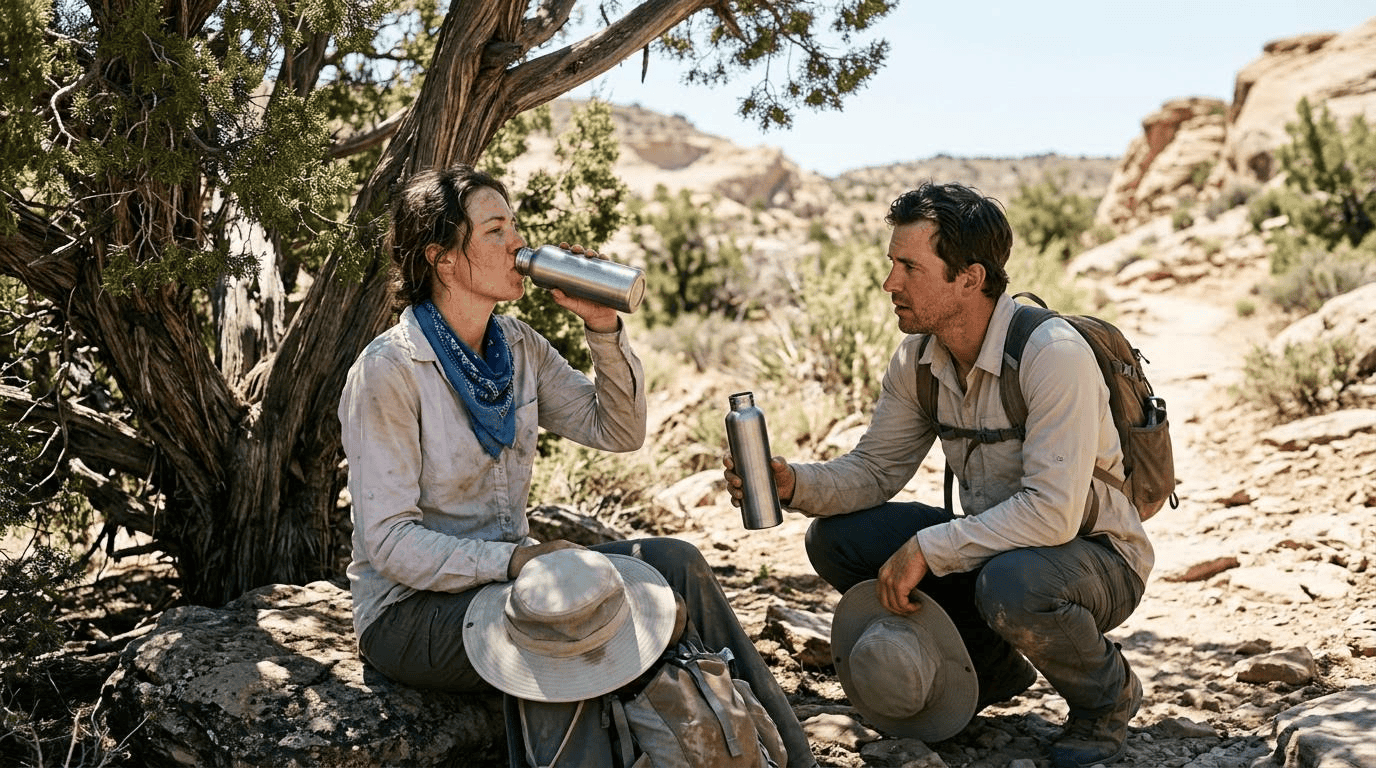
Heat Safety Rules That Matter More Than What to Wear Hiking in the Summer
Good clothes widen your margin. Timing and fluids decide whether you need it. The National Weather Service advises reducing, eliminating or rescheduling strenuous activity to the coolest time of day, and drinking plenty of water even before you feel thirsty. On a summer trail, that means early starts, long shaded breaks and a hard turnaround time.
Know the warning signs
CDC heat illness guidance lists these signs of heat exhaustion: headache, nausea, dizziness, weakness, irritability, thirst, heavy sweating and decreased urine output. If they appear, stop, move into shade, remove extra layers including shoes and socks, cool your head, face and neck with water and sip fluids.
Signs of heat stroke include confusion or slurred speech, loss of consciousness, hot dry skin or heavy sweating, seizures and a very high body temperature. Heat stroke is an emergency. Call 911, stay with the person, move them to shade and cool them fast with wet cloths and soaked clothing.
Check before you travel: heat illness can turn serious fast on exposed trails, and phone coverage is patchy in many canyons and parks. Tell someone your route and return time, check the forecast and any park heat warnings on the morning of your hike, and follow the official guidance linked in this article.
Pack the night before
Once you settle what to wear hiking in the summer, the rest is preparation. Lay it all out the night before so a 5 a.m. alarm does not cost you the sunscreen or the spare socks. For the wider kit list, the Holiday Vistas travel packing list essentials covers the travel side of the trip.
- Loose, light-colored sun shirt and trail-matched shorts or pants
- Wide-brim hat, UV-blocking sunglasses and a neck bandana
- Broad-spectrum sunscreen of SPF 15 or higher, in a pocket you reach without unpacking
- Breathable trail shoes, synthetic or merino socks and one dry spare pair
- All the water the route needs, plus food for every break
- A planned start time that puts exposed sections before 10 a.m.
Frequently Asked Questions
Is it better to wear shorts or pants hiking in the summer?
Pants suit open, high-sun trails and brushy or tick-prone ground, because they block UV and scratches. Shorts suit shaded forest paths with clear tread. Convertible zip-off pants let you switch when the trail changes.
What color should you wear hiking in the summer?
Wear light colors. The National Weather Service advises lightweight, loose-fitting, light-colored clothing in heat because it reflects heat and sunlight. White, tan and pale grey work well.
Is cotton bad for summer hiking?
Cotton is a poor choice in humid heat and at high elevation, because it stays wet and heavy. On a short hike in very dry desert heat, a damp cotton-blend shirt keeps cooling you longer, so it is a deliberate option there.
How often should you reapply sunscreen on a summer hike?
The CDC advises reapplying sunscreen after 2 hours in the sun and after sweating or toweling off. On a hot climb, that often means at every long break.
What should women wear hiking in the summer?
The same rules apply: a loose sun shirt, light-colored shorts, skort or pants, a wide-brim hat and synthetic or merino socks. Add a quick-dry sports bra with flat seams, because cotton bras hold sweat and chafe on long climbs.
What are the signs of heat exhaustion on a hike?
CDC guidance lists headache, nausea, dizziness, weakness, irritability, thirst, heavy sweating and decreased urine output. Stop, move to shade, remove extra layers, cool your head and neck with water and sip fluids.
References
- Heat Safety Tips and Resources: During a Heat Wave, National Weather Service
- Sun Safety, Centers for Disease Control and Prevention
- Heat-related Illnesses, CDC National Institute for Occupational Safety and Health
- South Kaibab Trail, National Park Service, Grand Canyon National Park