
A dollar goes almost three times further in parts of Central America than it does at home, yet the gap between the region's cheapest and priciest countries is wider than most first-time visitors expect. This guide ranks the cheapest countries to visit in Central America using World Bank price data, then adds the costs an index never shows: tourist cards, exit taxes and the premium you pay in the towns every traveller heads for.
The short answer: Nicaragua and Guatemala sit at the low end of the scale, El Salvador, Honduras and Panama cluster in the middle, and Belize and Costa Rica cost the most. The longer answer depends on where in each country you sleep, how you cross borders and which costs you control.

The Cheapest Countries to Visit in Central America, Ranked by World Bank Price Data
The most useful single number for comparing costs across borders is the price level index. The World Bank price level index for household consumption compares what the same basket of everyday goods and services costs in each country against the United States, which is fixed at 100. A score of 45 means that basket costs about 45 percent of the US price.
That basket covers food, transport, rent and services, the same categories that make up most of a travel budget. So the index gives you a fair first sort before you look at hostel listings or bus fares.
Prices checked on 26 November 2026 against World Bank data and official government fee pages. All figures in USD.
| Rank | Country | Price level (US = 100), 2024 | What $100 of US spending costs | Local currency |
|---|---|---|---|---|
| 1 | Nicaragua | 37.2 | about $37 | Cordoba (NIO) |
| 2 | Guatemala | 44.8 | about $45 | Quetzal (GTQ) |
| 3 | El Salvador | 48.0 | about $48 | US dollar (USD) |
| 4 | Honduras | 50.0 | about $50 | Lempira (HNL) |
| 5 | Panama | 51.1 | about $51 | Balboa, pegged to USD, and US dollar |
| 6 | Belize | 55.3 | about $55 | Belize dollar (BZD), 2 to 1 with USD |
| 7 | Costa Rica | 63.7 | about $64 | Colon (CRC) |
Source: World Bank, World Development Indicators, price level index (households and NPISHs final consumption expenditure), 2024.
Two results surprise people. First, Panama scores below Belize, even though Panama has the region's glossiest skyline and Belize feels like a small, laid-back country. Second, the spread is wide: the same spending pattern costs about 70 percent more in Costa Rica than in Nicaragua.
How to turn the index into your own daily budget
The index works as a multiplier. Take what a modest travel day would cost you at US prices, then multiply by the country's score. The table below runs that arithmetic for two sample days: a lean $80 day and a comfortable $150 day. These are calculations from the index, not quoted prices.
| Country | An $80 day at US prices becomes | A $150 day at US prices becomes |
|---|---|---|
| Nicaragua | about $30 | about $56 |
| Guatemala | about $36 | about $67 |
| El Salvador | about $38 | about $72 |
| Honduras | about $40 | about $75 |
| Panama | about $41 | about $77 |
| Belize | about $44 | about $83 |
| Costa Rica | about $51 | about $96 |
Source: Holiday Vistas arithmetic using the World Bank 2024 price level index. Real costs in tourist areas run higher, as the sections below explain.
Treat these as a floor for ordinary towns, not a promise for beach resorts. The World Bank itself describes price levels as a tool for broad comparison rather than a strict ranking, so a gap of two or three points, such as Honduras against Panama, matters less than the gap between the top and bottom of the table.

Nicaragua and Guatemala Stretch a Daily Budget Furthest, Costa Rica Least
The ranking sets the order. What follows is how each country spends in practice, where the savings come from and where costs creep up.
Nicaragua: the lowest price level in the region
Nicaragua scores 37.2, the lowest in Central America by a clear margin. Colonial cities such as Granada and Leon, the volcano country around Masaya and the lake island of Ometepe all sit inside that low-cost zone. Local buses, set lunches at small eateries and family-run guesthouses keep daily costs down. The Pacific surf towns around San Juan del Sur cost more, because they cater to visitors.
Arrival costs a little extra: the US State Department lists a $10 cash fee for a tourist entry stamp. Plan for official guidance too, since it affects how many travellers weigh the trip (see the callout below).
Guatemala: highlands value with the most to see per dollar
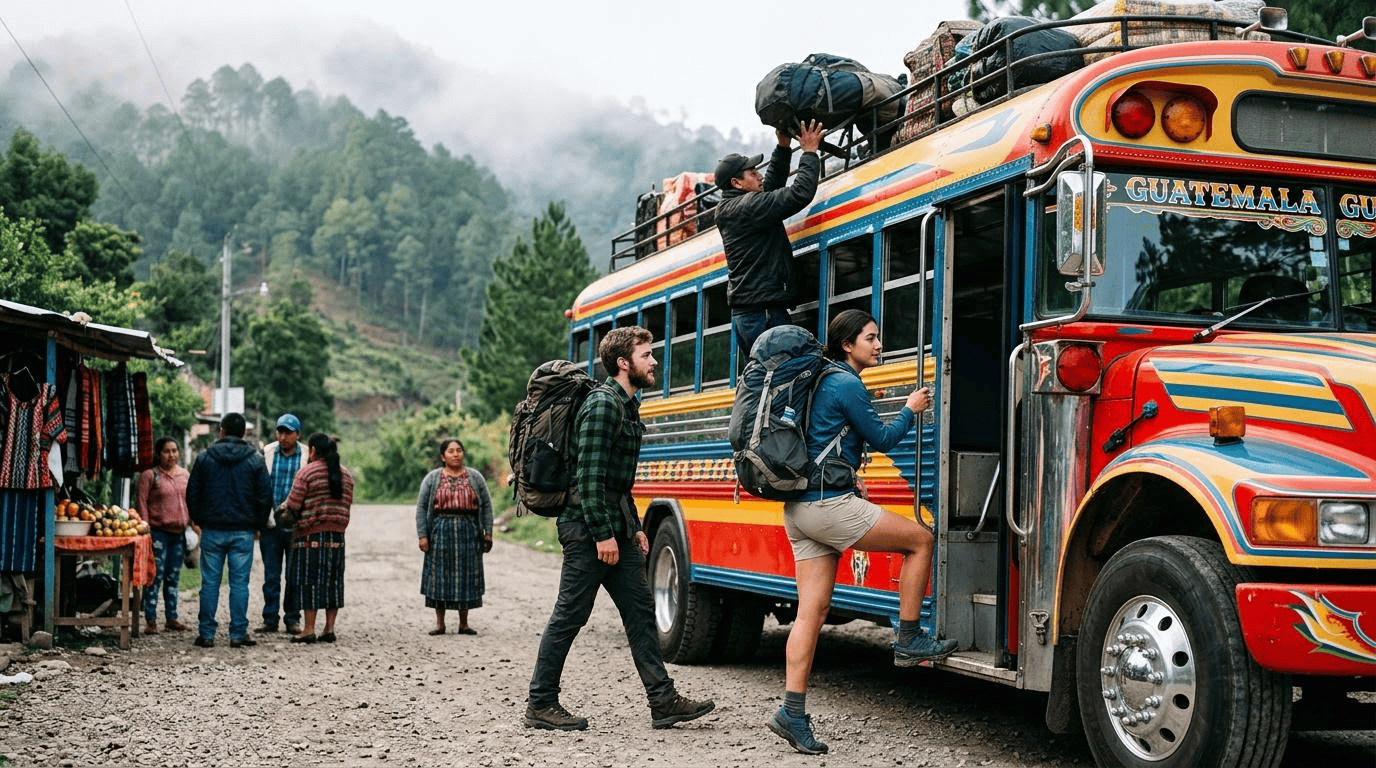
Guatemala scores 44.8. Its draw for budget travellers is density: colonial Antigua, the lake towns of Atitlan, the market at Chichicastenango and the Maya ruins of Tikal fit into one trip, linked by shared shuttles and the brightly painted local buses. Costs climb in Antigua and around Tikal. They fall fast in highland towns that see fewer tour groups.
El Salvador: no currency exchange and short travel distances
El Salvador scores 48.0 and uses the US dollar, so you skip exchange fees and mental arithmetic. The country is small, which means short, cheap bus rides between the surf coast, the Ruta de las Flores villages and the capital. Visitors pay $12 for a tourist card on arrival.
Honduras: island prices and mainland prices differ
Honduras scores 50.0. The Copan ruins near the Guatemalan border and the mainland towns sit near that average. The Bay Islands, Roatan and Utila, cost more, since food and fuel arrive by boat and dive tourism sets prices. Utila has long drawn budget divers who still find it cheaper than Roatan.
Panama: city costs balanced by cheap transit
Panama scores 51.1, slightly under Belize. Panama City has costly neighbourhoods, but public transport is cheap and the dollar circulates freely beside the pegged balboa. The Caribbean islands of Bocas del Toro and the San Blas region cost more because of boat transfers and tours.
Belize: English-speaking, compact and pricier than its neighbours
Belize scores 55.3. English is the official language and the Belize dollar is fixed at two to one with the US dollar, which makes planning easy. The cayes, Caye Caulker and Ambergris Caye, carry island prices. Inland San Ignacio, close to the Guatemalan border, gives better value and quick access to Maya sites.
Costa Rica: the region's highest price level
Costa Rica scores 63.7. You pay for well-run national parks, good roads and a large tourism industry. Daily costs in La Fortuna, Monteverde and the Guanacaste beaches can rival those of a US road trip. Budget travellers save by riding public buses instead of private shuttles and by cooking in hostel kitchens. If you plan a long stay rather than a holiday, our guide to who qualifies for the Costa Rica digital nomad visa covers income rules and fees.
Check before you travel: Official guidance differs by country and changes. When checked on 26 November 2026, the US State Department advised US citizens to reconsider travel to Nicaragua, Guatemala and Honduras, and to exercise increased caution in El Salvador and Costa Rica. Read the current advisory for each country on travel.state.gov, or your own government's travel advice, before you book.

Tourist Cards and Exit Taxes Add a Fixed Cost the Index Misses
A price index measures what locals pay for everyday goods. It ignores the fees only visitors pay. On a multi-country trip those fees add up, and they hit hardest on short visits.
The State Department's Nicaragua page lists a $10 cash fee for the tourist entry stamp, valid for up to 90 days, and a $42 departure tax that airlines usually fold into the ticket price. The State Department's El Salvador page lists a $12 tourist card bought on arrival. Leaving Belize overland costs more: the UK government's Belize travel advice sets a departure tax of 40 Belize dollars, or 20 US dollars, at land and water crossings to Guatemala or Mexico, with the air version usually included in the fare.
| Country | Visitor fee | When you pay | Source page date |
|---|---|---|---|
| Nicaragua | $10 tourist entry stamp, cash | On arrival | Last updated 13 December 2024 |
| Nicaragua | $42 departure tax | Usually inside your air ticket | Last updated 13 December 2024 |
| El Salvador | $12 tourist card | On arrival | Last updated 17 July 2023 |
| Belize | BZ$40 (US$20) departure tax | At land or water border exit | Updated 5 November 2026 |
Source: US Department of State country information pages (Nicaragua, El Salvador); UK Foreign, Commonwealth and Development Office travel advice (Belize).
The CA-4 agreement saves fees, but the 90 days are shared
Guatemala, El Salvador, Honduras and Nicaragua belong to the CA-4 border control agreement. According to both State Department pages above, US citizens who enter one of the four legally may travel freely among the other three for up to 90 days. That is the cheapest part of the region to string together, because one entry covers four countries.
Here is the detail many travellers miss: the 90 days form one shared allowance across the four countries, not 90 days in each. Crossing from Guatemala into Honduras does not restart the clock. If you plan a slow trip of three months or more, budget for an extension or an exit from the CA-4 zone, and confirm the current rule with each country's immigration office.
Check before you travel: Entry fees, tourist card rules and departure taxes change, sometimes without much notice. The figures above come from official pages dated as shown. Confirm them with the official government source for each country before booking, and carry small US dollar notes in cash for border fees.

Tourist Hubs Cost More Than the National Average Suggests
The national index blends every town, village and city. Visitors do not spread out that way. They gather in a short list of places, and those places price for visitors.
In practice, each country has a two-tier cost structure:
- Visitor hubs: Antigua in Guatemala, San Juan del Sur in Nicaragua, Roatan in Honduras, Caye Caulker in Belize, Bocas del Toro in Panama and La Fortuna in Costa Rica. Expect menus in English, prices in dollars and tours sold on every corner.
- Everyday towns: Xela (Quetzaltenango) in Guatemala, Leon and Esteli in Nicaragua, Santa Ana in El Salvador, San Ignacio in Belize and David in Panama. These run much closer to the national index.
This matters more than the country ranking for many trips. A week split between Xela and the smaller Atitlan villages can cost less than a week in Antigua alone, even though both sit in Guatemala. The same logic applies across the region: a modest town in Costa Rica's Central Valley can beat a Bay Islands dive resort in Honduras, despite Costa Rica's higher national score.
Island and park premiums
Islands cost more nearly everywhere, because food, fuel and supplies arrive by boat. National park entry fees and guided tours also add fixed sums that have nothing to do with local prices. Price these separately from your daily budget, since a single cave tour, boat trip or park day can equal two days of ordinary spending.
A Three-Week CA-4 Route Pays Only Two Tourist Card Fees
The CA-4 rule and the price ranking point to the same plan: spend most of your time in the four cheapest countries and cross their borders by bus. Here is one route shape built on those facts.
- Week one, El Salvador: fly into San Salvador and pay the $12 tourist card. Spend a few days on the Ruta de las Flores and the surf coast. Your money is already in dollars.
- Week two, Guatemala: take a cross-border bus to Guatemala inside the CA-4 zone. Base yourself in Xela or a smaller Atitlan village rather than Antigua, and visit Antigua as a short stop.
- Week three, Nicaragua: continue overland through Honduras to Leon and Granada. Pay the $10 tourist entry stamp in cash. Fly home from Managua, where the $42 departure tax normally sits inside your ticket.
Fixed entry costs on that route come to $22 in tourist cards, plus any small land crossing charges at the Honduras borders, which you should confirm before you go. All 21 days count toward the shared 90-day CA-4 allowance, which leaves plenty of room. Adding Belize or Costa Rica later raises both the daily price level and the border costs, so keep them for a separate trip or the end of a long one.
Pack light for this kind of route. Local buses have little luggage space, and a single carry-on makes transfers faster. Our travel packing list essentials guide covers what to bring.

Beds, Food and Buses Decide Most of Your Daily Spend
Once you pick a country, three categories decide most of what you spend each day. The same split works anywhere, and it mirrors the flights, beds, transport and food breakdown in our guide to travelling Europe cheap.
Beds
Accommodation is usually the largest single cost. Dorm beds and family-run guesthouses cost far less than hotels in every country on the list. Private rooms in guesthouses often cost little more than two dorm beds, so pairs and couples gain the most by booking private. Prices rise on weekends and national holidays, especially Semana Santa, the week before Easter, when locals travel too.
Food
The set lunch is the best value meal in the region. Small eateries, called comedores in much of Central America and sodas in Costa Rica, serve a fixed plate of rice, beans, a protein and salad at a fraction of restaurant prices. Market stalls and street food stretch a budget further. Imported goods, alcohol in tourist bars and Western-style cafes cost close to US prices, even in the cheapest countries.
Buses and transfers
Public buses cost far less than private tourist shuttles, though they take longer and stop often. A common middle path: ride public buses within a country and book a shuttle only for complex border days. Night travel and very early departures save a bed night, but check local advice on road safety first.
Cash and cards
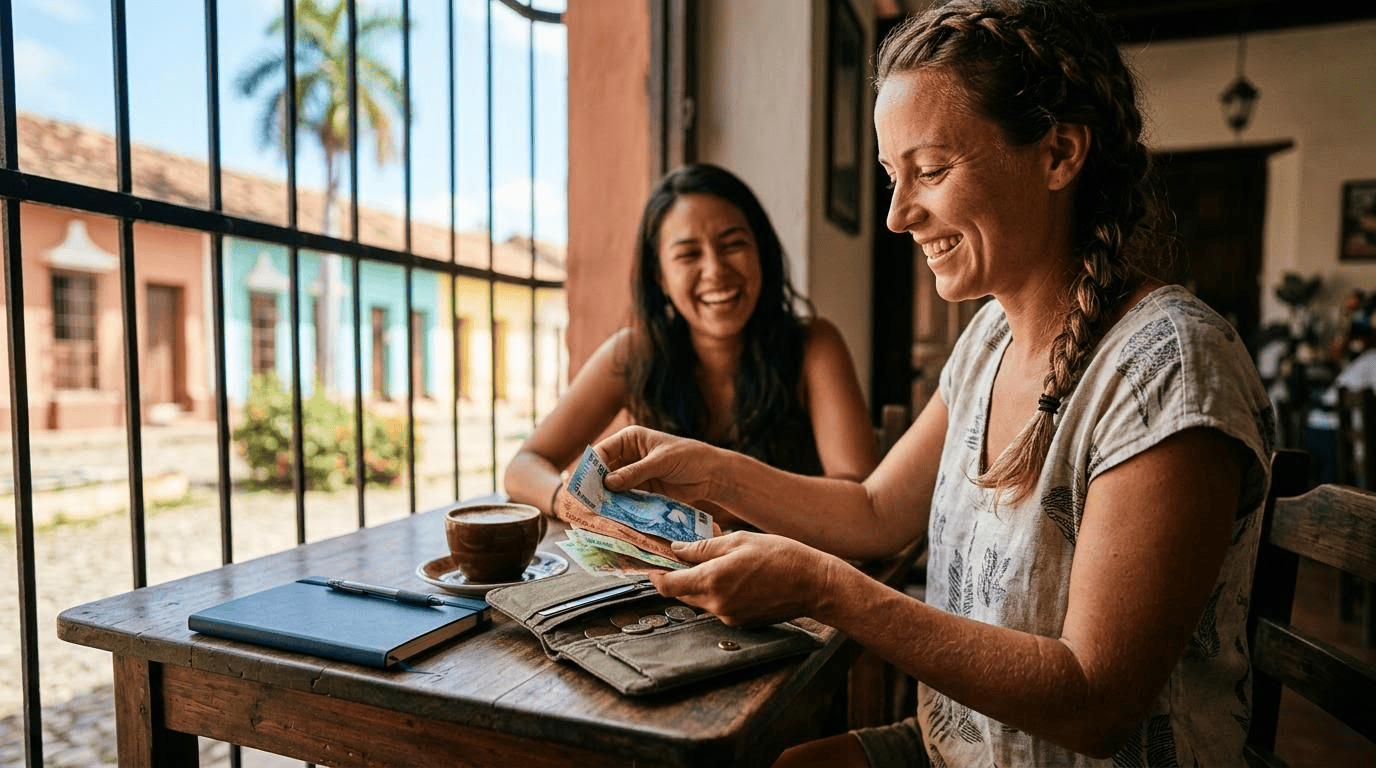
Cash still rules at markets, small eateries and many border posts. ATM fees add up on a long trip, so withdraw larger sums less often and use a card with no foreign transaction fee where cards are accepted. In El Salvador and Panama, US dollars work directly. In Belize, US dollars are widely accepted at the fixed two to one rate.

Choosing Among the Cheapest Countries to Visit in Central America
If price comes first, Nicaragua and Guatemala lead, and the CA-4 agreement lets you combine them with El Salvador and Honduras on one entry allowance. If you want dollars in your pocket and simple logistics, El Salvador and Panama trade a little cost for convenience. If you want English, island time or well-organised parks, Belize and Costa Rica deliver, at the highest prices in the region.
Whichever you choose, the biggest saving is not the country. It is where you sleep inside it. Base yourself in everyday towns, visit the hubs as day trips, and the cheapest countries to visit in Central America become cheaper still.
Frequently Asked Questions
What is the cheapest country to visit in Central America?
Nicaragua has the lowest price level in Central America, at 37.2 on the World Bank 2024 index where the United States equals 100. Guatemala follows at 44.8.
Is Costa Rica the most expensive country in Central America?
Yes, on the World Bank 2024 price level index Costa Rica scores 63.7, the highest of the seven Central American countries. Belize is second at 55.3.
Is Panama cheaper than Belize?
On the World Bank 2024 index, Panama scores 51.1 and Belize 55.3, so everyday prices in Panama run slightly lower. Island stays in either country cost more than the national figure.
Do I pay to enter Central American countries?
Some charge visitors. The US State Department lists a $10 tourist entry stamp for Nicaragua and a $12 tourist card for El Salvador, and Belize charges a US$20 departure tax at land borders.
Can I visit Guatemala, El Salvador, Honduras and Nicaragua on one entry?
Yes. Under the CA-4 agreement, US citizens who enter one of the four countries legally may travel among the other three for up to 90 days in total.
Which country uses the US dollar?
El Salvador uses the US dollar as its currency. Panama uses the US dollar alongside the balboa, which is pegged one to one.
References
- World Bank, World Development Indicators: Price level index (Households and NPISHs final consumption expenditure)
- US Department of State: Nicaragua International Travel Information, last updated 13 December 2024
- US Department of State: El Salvador International Travel Information, last updated 17 July 2023
- UK Foreign, Commonwealth and Development Office: Belize entry requirements, updated 5 November 2026