
A week away with kids rarely goes over budget because of one big mistake. It drifts there through small leaks: a seat you did not need, a room with no fridge, three restaurant meals a day because nobody planned breakfast. Planning family friendly vacations on a budget works best when you price the trip the way a grocery list works, line by line, before you pick the place. This guide breaks the cost into flights, beds, food and activities, shows which official rules change the math for parents, and gives you a six-week plan to book in the right order.
Every figure below comes from an official source, linked where it appears. Prices and rules change, so treat the numbers as a starting point and confirm them before you pay.
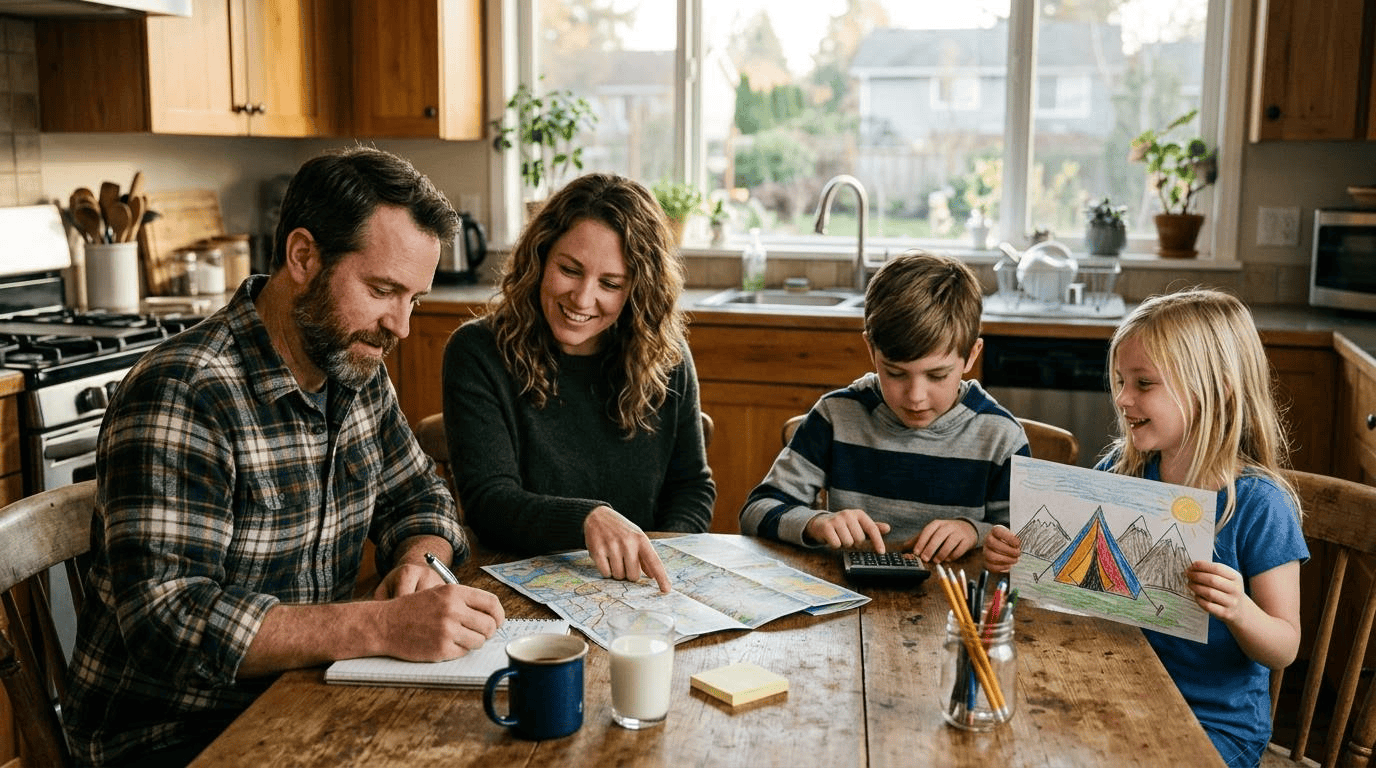
Family friendly vacations on a budget start with a per-night number, not a destination
Most families start with a place and then try to squeeze the cost. Flip it. Decide what you will spend per night for the whole family, all costs in, and let that number filter the destinations. A cap per night forces every later choice, from the flight to the lunch stop, to fit inside it.
Split the trip into four lines. Each one behaves differently, and each has its own lever.
| Cost line | How it scales | Biggest lever |
|---|---|---|
| Flights or fuel | Per person if you fly, per car if you drive | Drive range, travel dates, who needs a seat |
| Beds | Per night, plus one-off fees | Length of stay, kitchen access, fee structure |
| Food | Per person, per meal | How many meals you cook or pack |
| Activities | Per ticket | Free public lands, passes, one paid day |
Source: Holiday Vistas planning framework, built from the official sources cited below.
Here is the trip shape this guide uses as its running scenario: two parents, children aged 7 and 10, five nights in early autumn, either driving to a national park region within one day's reach or flying to a coastal city. The same four lines apply to both. Only the weights change. In the drive scenario, beds and food carry most of the cost. In the fly scenario, four airfares can match the rest of the trip combined.
The non-obvious part: per-night math punishes short stays. One-off costs such as cleaning fees, airport transfers and the first big grocery run get divided by the number of nights. Five nights spread them thin. Two nights do not. If your budget is tight, one longer trip usually costs less per night than two short ones.
Dates move every line at once
The calendar is the one lever that touches flights, beds and activities together. School holidays, long weekends and summer weeks push demand up everywhere families go, so fares and room rates climb at the same moment. If your children's school calendar allows it, look at the first week after a holiday period ends, or at a long weekend where you add a weekday on one side. Midweek departures and returns also tend to price lower than Friday and Sunday travel. Before you lock a destination, check the same trip across three or four date options and note the total for each. The cheapest week often beats the cheapest destination.

Flights take the biggest bite, so decide who needs a seat before you search fares
Airfare is the one line that multiplies by every person in the family. Before you compare prices, settle two questions: does your youngest need a paid seat, and could the trip work as a drive instead?
Lap child or paid seat for kids under two
US airlines generally let a child under two fly on a parent's lap on domestic routes, which is the obvious saving. The safety picture is clear, though. The Federal Aviation Administration's guidance on flying with children says the safest place for a child under two on a US airplane is an approved child restraint system, not a lap, for the whole flight. It also states that buying a ticket for the child is the only way to guarantee you can use that restraint on board. Bring a seat labelled as certified for use in aircraft, and check that your child's weight and size fit the manufacturer's limits.
A practical middle path for budget trips: ask at check-in whether the flight has empty seats. If it does, some airlines will let you use an open seat for the car seat. It is never guaranteed, so plan your budget as if you will hold the child the whole way, and decide in advance whether that trade feels right for your family on that flight length.
Check before you travel: airline rules on lap children, international lap fares and car seat use on board differ by carrier and route. Confirm with your airline before you book, and read the FAA child safety guidance linked above.
Security rules that save airport spending
Airport food and drinks cost more than the same items anywhere else. Packing baby supplies from home avoids that markup, and the rules allow it. TSA's page on traveling with children states that formula, breast milk, toddler drinks and baby food above 3.4 ounces are allowed in carry-on bags and do not need to fit in the quart-sized bag. Tell the officer at the start of screening and take those items out for separate screening. Clear bottles screen more easily than pouches, which may need to be opened. Ice packs to keep them cold are also allowed.
For older kids, the 3.4-ounce limit still applies to their drinks, so pack empty refillable bottles and fill them after security. Add a bag of snacks per child. Those two habits alone stop the most common airport spending.
When driving beats flying
For a family of four, the drive question is simple arithmetic: four return fares against fuel, one or two road meals and possibly one extra night. A drive of six to eight hours often comes out ahead for four people once you add every fare, and it also removes checked bag fees and airport transfers. A long drive costs time, though, and younger kids need stops every couple of hours. Price both, then pick the one that fits your per-night cap.
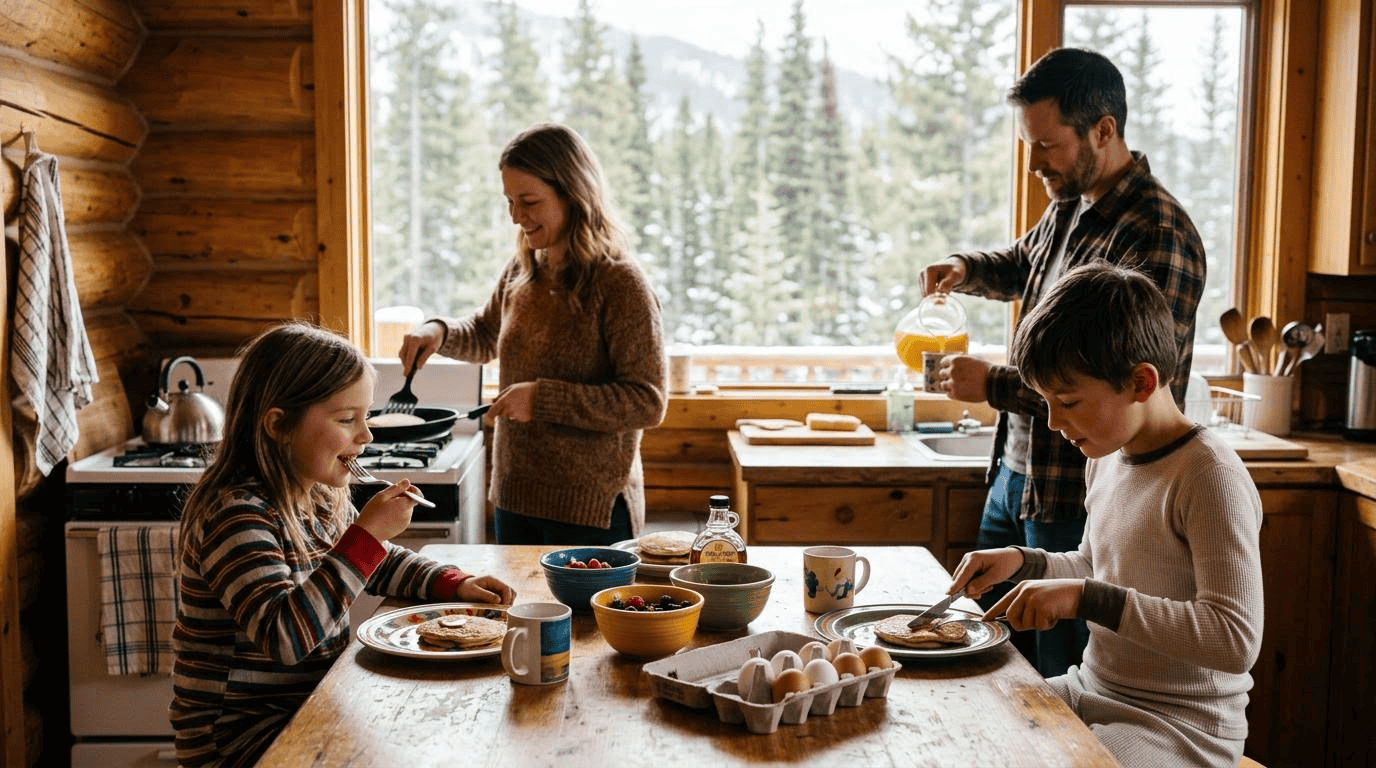
A kitchen beats a cheaper room once your stay runs three nights or more
Lodging is where family vacations on a budget most often go wrong. Families book the lowest nightly room rate and then spend the difference several times over on meals. The right comparison is the room rate plus what you will spend eating because of that room.
A standard hotel room with no fridge pushes you into three bought meals a day. A suite with a kitchenette, or a rental apartment or cabin with a full kitchen, lets you cook breakfast and pack lunch. Over five nights, that is ten meals you no longer buy. For a family of four, those ten meals are often worth more than the nightly gap between the two options.
Read the fee line, not the headline rate
Rental listings often add a one-off cleaning fee and a service fee on top of the nightly rate. Those fees hit short stays hardest. Always compare the total for your exact dates, divided by your number of nights. A rental that looks cheap at the nightly rate can cost more per night than a hotel suite for a two-night stay, then flip to cheaper at five nights.
Count beds, not rooms
Check how many people each bed suits and whether a sofa bed or crib is included or charged. Many hotels list a maximum occupancy per room, and a family of five may need two rooms or a suite. Check the cancellation terms too. A free-cancellation rate costs a little more but protects you if a child gets sick the week before.
Hotels with breakfast included deserve a second look. A free breakfast for four every morning covers one of the three meal lines, and it often tips a slightly higher room rate into the cheaper total.
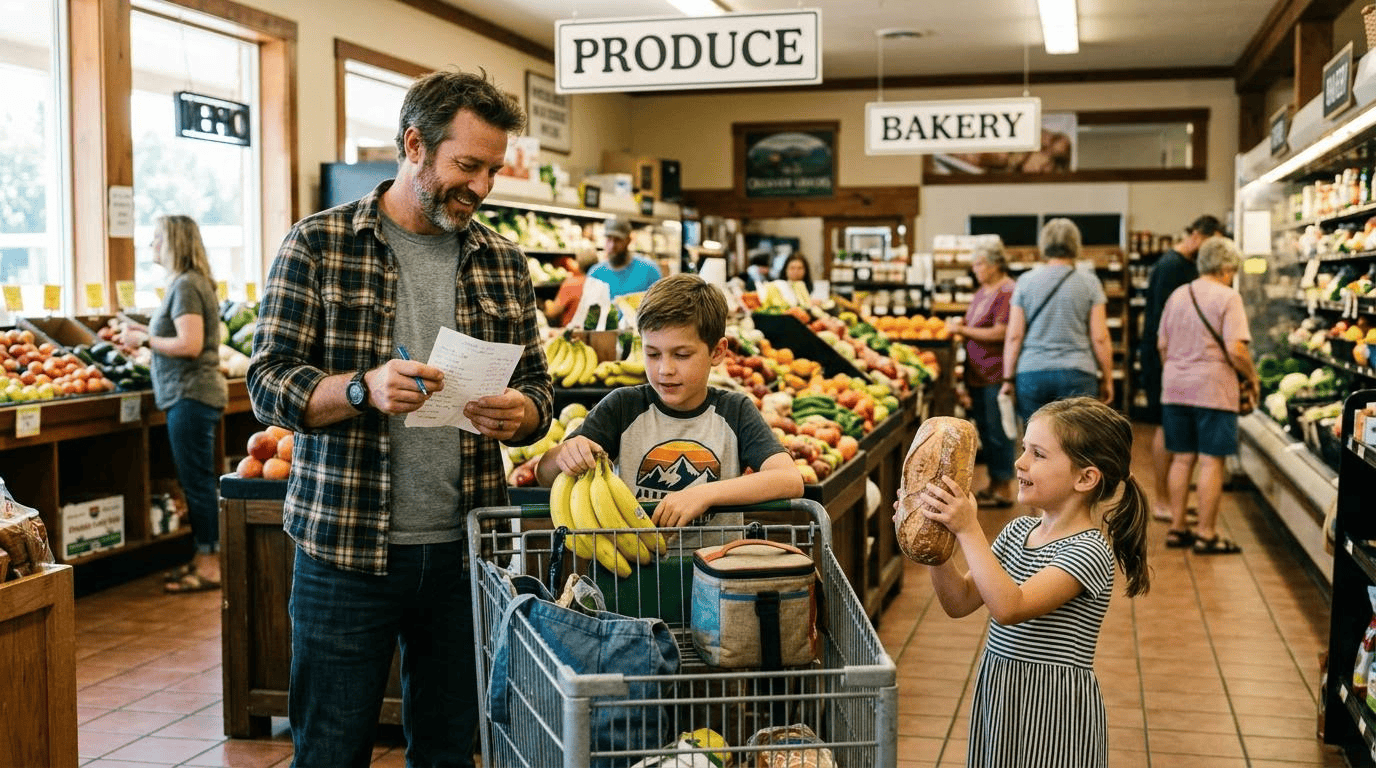
Food stays affordable when you budget from the USDA grocery figure and add one meal out a day
Food is the line families underestimate most, because it hides in small purchases. A firm baseline helps. The US Department of Agriculture publishes what a home grocery budget costs each month, by household type.
Prices checked on 28 November 2026 against current booking costs and the latest official USDA figures.
| USDA Thrifty Food Plan, October 2026 | Cost (USD) |
|---|---|
| Reference family of four, per week | $236.50 |
| Reference family of four, per month | $1,024.60 |
| Per day (weekly figure divided by 7, rounded) | About $34 |
Source: USDA Food and Nutrition, Cost of Food monthly reports, October 2026. Reference family: a couple aged 20 to 50 with children aged 6 to 8 and 9 to 11. The per-day figure is a Holiday Vistas calculation.
The USDA Cost of Food monthly reports list four plans, from Thrifty up to Liberal. The Thrifty plan is the lowest-cost home diet the department models, so it works as a floor. On vacation, you will spend more than that floor: you are buying in smaller packs, at resort-area stores, without a stocked pantry. Plan on the Thrifty daily figure as your grocery line for every day you cook, then add a separate line for meals out.
The one-meal-out rule
Pick one meal a day to buy and cook or pack the other two. Lunch out is usually cheaper than dinner out at the same restaurant, and kids are less tired at midday. Breakfast in, lunch out, a simple dinner in: that pattern keeps the trip feeling like a holiday without a restaurant bill three times a day.
The first grocery run
Shop on arrival day for the whole stay: breakfast items, sandwich supplies, fruit, snacks and refillable drinks. Bring basics from home if you drive, such as oil, salt, coffee and a small cooler. A first run that covers five breakfasts and four packed lunches removes the daily small purchases that add up fastest.

Free public lands can cut the activity line close to zero
Paid attractions are where a careful budget breaks. One theme park day for four can match two nights of lodging. The fix is not to skip them entirely, but to build most days around free places and pick one paid day the kids choose.
Most lists of ideas for family vacations on a budget skip the simplest one: US public lands. If one of your children is a fourth grader, the federal Every Kid Outdoors program gives the child and their family free access to hundreds of parks, lands and waters for a full year. The program's site tells parents that not every site accepts the paper pass, so call ahead if you are unsure. Children get the pass by completing the adventure diary on the program's site, and educators can also request passes for their fourth-grade students.
Beyond that pass, many state parks, beaches, city parks, public libraries and museums have free or low-cost entry, especially on set days. A national forest trail, a lake beach and a town playground can fill three days at almost no cost. Save the ticketed attraction for the middle of the trip, when energy is highest.
If you plan a hike with kids, keep it short and check conditions with the park first. Trail access, weather and closures change, and the park or forest office has the current picture.
Check before you travel: pass eligibility, accepted sites and park opening hours change. Confirm with the Every Kid Outdoors program and the specific park before you go, and check trail and weather conditions with the park office on the day.
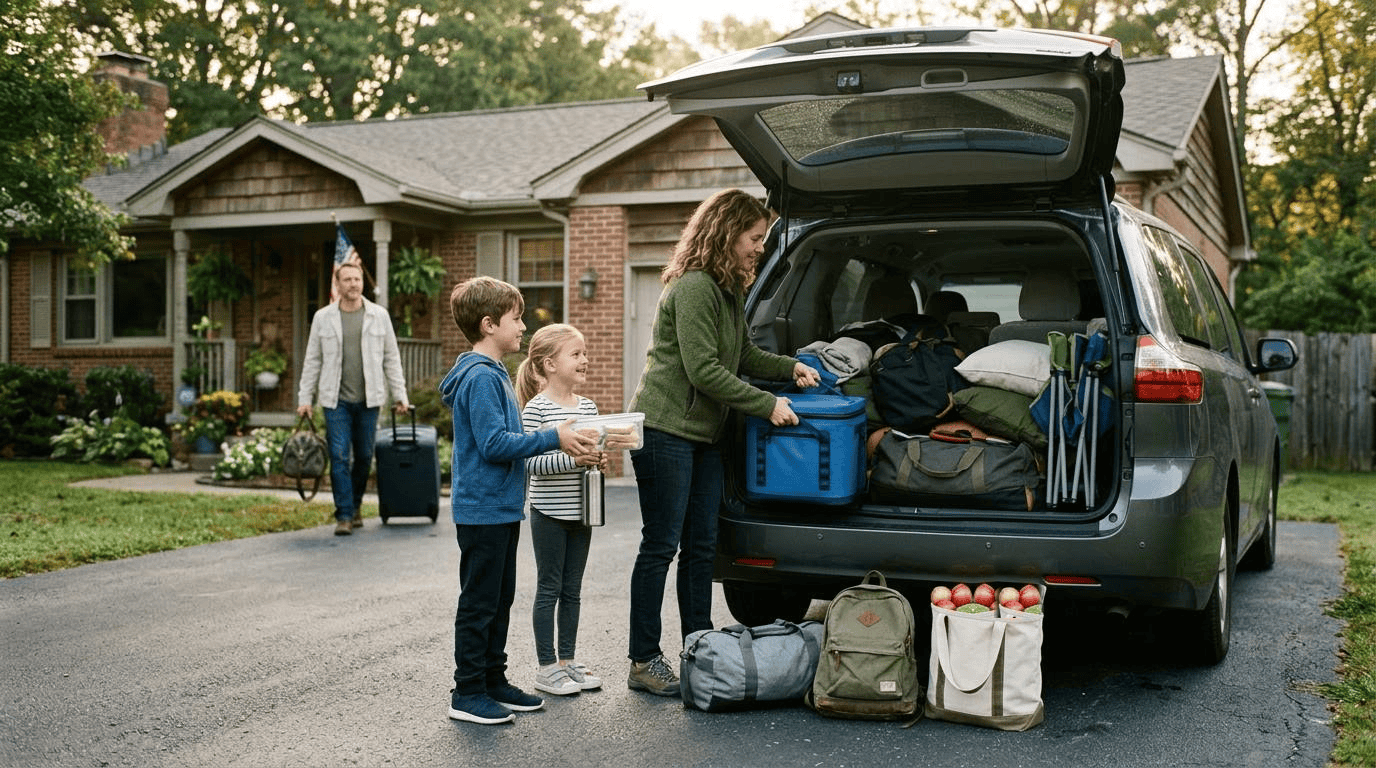
How to plan family friendly vacations on a budget in six weeks
Order matters. Booking the expensive, fast-moving items first and the flexible ones last keeps your per-night cap intact. Here is a simple six-week timeline for the running scenario.
- Week 6: set the cap. Agree on a total budget, divide it by nights, and write down the four cost lines. Decide drive or fly using the arithmetic above.
- Week 5: book transport. If you fly, compare fares across several dates, decide on lap or seat for a child under two, and add any bag fees to the total before you compare. If you drive, plan the route and one overnight stop if the drive runs past about eight hours.
- Week 4: book beds. Compare full totals for your dates, not nightly rates. Favour a kitchen or included breakfast. Pick free cancellation where the price gap is small.
- Week 3: plan activities. List free parks, beaches and libraries near your base. Choose one paid day with the kids. Check pass eligibility and opening days.
- Week 2: plan meals. Write a simple menu: breakfasts in, packed lunches, one meal out a day. Make the first grocery list.
- Week 1: pack to save. Refillable bottles, snacks per child, baby supplies under the screening rules above, a small cooler if you drive. Reconfirm bookings and park hours.
A family that follows this order usually finds the budget holds, because the big decisions are fixed before the small spending starts. For packing help, the travel packing list essentials guide covers documents, clothing and toiletries. If you are weighing a trip abroad instead, the guide to Europe family friendly vacations for kids under 10 compares countries by age and transport, and the Europe budget breakdown shows how flights, beds and food behave on that side of the Atlantic.
Family friendly vacations on a budget come down to a few early decisions: a per-night cap, honest seat choices, a kitchen for longer stays, a grocery baseline and free places to fill the days. Get those right and the rest of the trip has room to breathe.

Frequently Asked Questions
How much should a family of four budget per day on vacation?
Start from a per-night cap that covers beds, transport, food and activities. For food alone, the USDA Thrifty Food Plan put a family of four at $236.50 a week in October 2026, about $34 a day, before any meals out.
Does a child under two need a plane ticket?
Not on most US domestic flights, where a lap child is allowed. The FAA says an approved child restraint in a paid seat is the safest option and the only way to guarantee you can use one on board.
Can I bring formula and baby food through airport security?
Yes. TSA allows formula, breast milk, toddler drinks and baby food above 3.4 ounces in carry-on bags, outside the quart-sized bag. Tell the officer at the start of screening.
Is a vacation rental cheaper than a hotel for a family?
Often for stays of three nights or more, because a kitchen cuts meal costs and one-off fees spread over more nights. For one or two nights, a hotel suite with free breakfast is often cheaper. Compare full totals for your dates.
What is the cheapest way to feed kids on vacation?
Cook breakfast, pack lunch and buy one meal a day. Do one large grocery run on arrival day and carry refillable bottles and snacks.
Are national parks free for kids?
US fourth graders can get a free Every Kid Outdoors pass that gives them and their family free access to hundreds of federal parks, lands and waters for a year. Not every site accepts the paper pass, so call ahead.
References
- Flying with Children, Federal Aviation Administration
- Traveling with Children, Transportation Security Administration
- USDA Food Plans: Cost of Food Monthly Reports, US Department of Agriculture, October 2026 report
- Every Kid Outdoors, US Department of the Interior
Spotted an error? Email editor@holidayvistas.com with the article link.