Vietnam rewards first-time visitors fast. You get a bowl of noodle soup on a pavement stool before 8 a.m., a lantern-lit riverside walk in a 500-year-old port town, and a sleeper train that runs the length of the country. Is it safe to visit Vietnam? The short answer from official sources is yes, with a few street-smart habits. This guide covers what the US and UK governments say, which cities suit a first trip, how the e-visa works, and the small set of risks that actually shape a visit: traffic, bag grabs and weather.
Every rule below links to the government or tourism body that publishes it. Entry rules and fees change, so treat the dates as a starting point and confirm before you book.
Is it safe to visit Vietnam? US advice sits at the lowest level: exercise normal precautions
The US Department of State's Vietnam country information page sets its travel advisory at "Exercise normal precautions." That is the lowest of the State Department's four advisory levels, the same tier it gives to the most trouble-free destinations it covers.
The same page is frank about where problems come from. It describes petty theft, bag grabs and pickpocketing in crowded and tourist areas, and it calls road traffic dangerous and chaotic. Those two themes, small theft and the roads, account for most of what goes wrong for visitors. Violent crime against tourists is not the pattern official sources describe.
One rule surprises people: the State Department advises checking with local authorities before you travel close to Vietnam's land borders, because those zones are not always marked. Mainstream routes through Hanoi, Ha Long Bay, Hue, Hoi An, Da Nang and Ho Chi Minh City sit well away from them.
So the useful question is not whether Vietnam is safe in general. It is which habits keep a well-trodden route smooth. The rest of this guide answers that, section by section.
Hanoi, Hoi An and Ho Chi Minh City reward first-timers with walkable cores and street food on every corner
Most first trips link three bases, and each one is easy to learn on foot.
Hanoi: lakes, lanes and morning street food
Hanoi's Old Quarter packs narrow shophouses, markets and cafes into a compact grid you can cross on foot. Hoan Kiem Lake sits at its southern edge and fills with walkers, joggers and tai chi groups at dawn. Staying within a few blocks of the lake keeps most sights, food stalls and the evening night market within walking distance, which cuts the number of rides you need.
Hoi An: a preserved trading port at walking pace
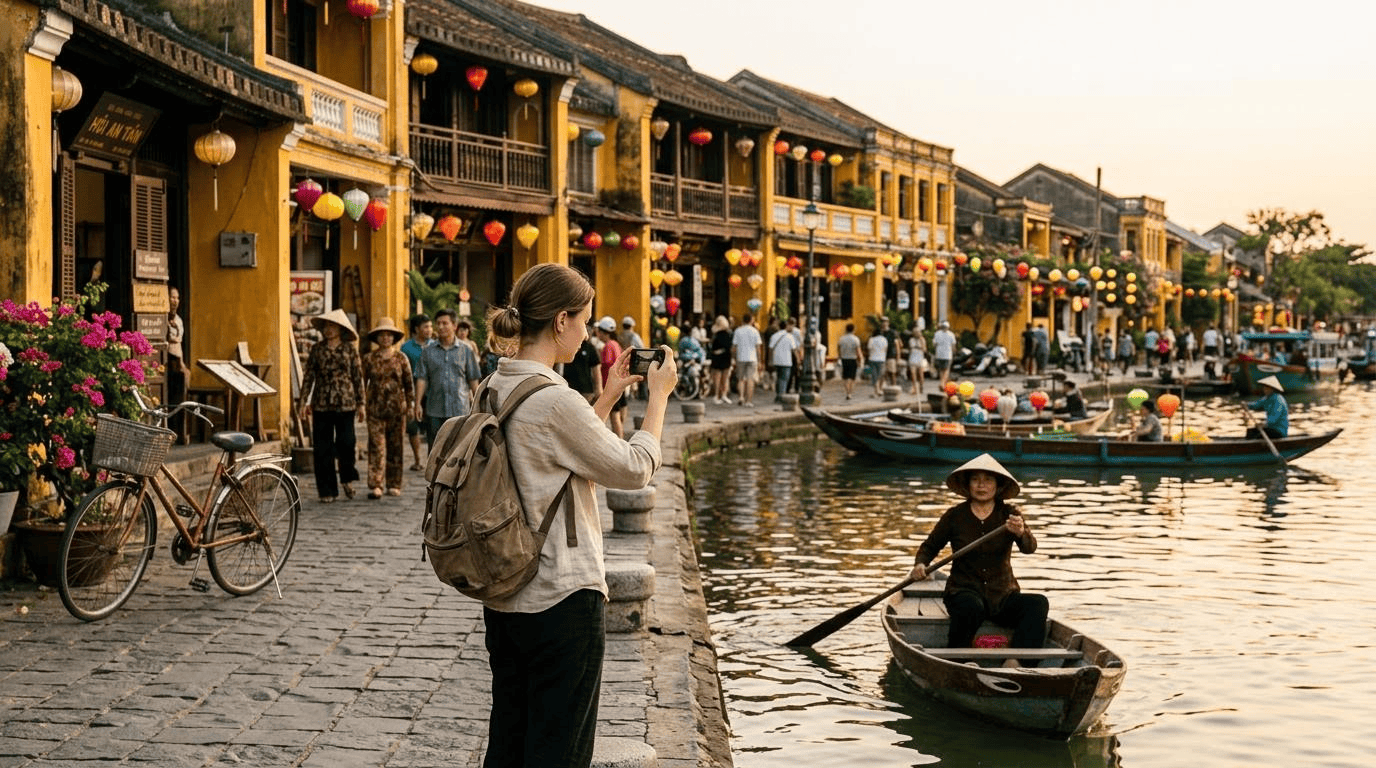
UNESCO describes Hoi An Ancient Town as an exceptionally well-preserved small-scale trading port that was active from the 15th to the 19th century. More than 1,100 timber-frame buildings survive, including an 18th-century Japanese covered bridge, shophouses with tiled roofs and family worship halls. The core is compact and largely pedestrian, so you meet tailors, lantern makers and riverside cafes at strolling speed rather than through traffic.
Hue and Da Nang: the central link between north and south
Hue was the seat of Vietnam's last imperial dynasty, and its walled citadel, royal tombs and Perfume River make a calm two-day stop. Da Nang, south of Hue along the coast and a short drive north of Hoi An, has a long city beach and the main airport for the central region. Many visitors fly into Da Nang and base themselves in Hoi An, which keeps the busiest airport transfer short and the evenings quiet.
Ho Chi Minh City: big-city energy, easy logistics
Ho Chi Minh City (still called Saigon by many locals) is louder and faster, with French-era buildings, rooftop bars and a huge street food scene. District 1 holds most of what visitors want, and ride-hailing apps make it simple to move between sights without negotiating fares.
If food culture drives your trip, plan meals around markets and breakfast stalls rather than restaurant lists. Pho, banh mi and broken rice are morning and lunchtime foods in most cities, and the busiest stalls turn stock over fastest.

A north to south route runs on trains, short flights and app-booked rides, so you never need to drive a motorbike
The single biggest safety decision you make in Vietnam is how you get around. Here is a two-week route shape that keeps road risk low:
- Days 1 to 4: Hanoi, with an overnight boat trip to Ha Long Bay booked through your hotel or a licensed operator.
- Day 5: fly or take the overnight train south to Hue or Da Nang.
- Days 6 to 9: Hoi An as a base, with day trips to Da Nang's beaches and Hue's imperial city by car with a driver.
- Day 10: fly from Da Nang to Ho Chi Minh City.
- Days 11 to 14: Ho Chi Minh City, plus a guided day trip to the Mekong Delta.
That plan covers the country's best-known sights with no self-driving at all. It matters because the State Department strongly discourages visitors from operating a motorcycle or scooter in Vietnam and notes that motorbike crashes are a leading cause of death and serious injury. The UK government adds that helmets are compulsory for riders and passengers, that you need a 1968 international driving permit alongside your home licence to ride legally, and that riding without third-party insurance is illegal.
The non-obvious point: check your policy wording, because many travel insurance policies exclude motorbike accidents when you ride without a valid licence for that class of vehicle. A rented scooter is cheap, but an uninsured hospital stay is not. If you want the motorbike experience, book a guided tour where a licensed local rider drives and you sit on the back with a helmet.
For city rides, use a ride-hailing app or a hotel-booked car. The UK advice names Grab and XanhSM and tells visitors to book the full journey in the app, which fixes the route and the fare before you get in.
Entry rules: one e-visa covers most trips, but the passport validity rule catches more travellers
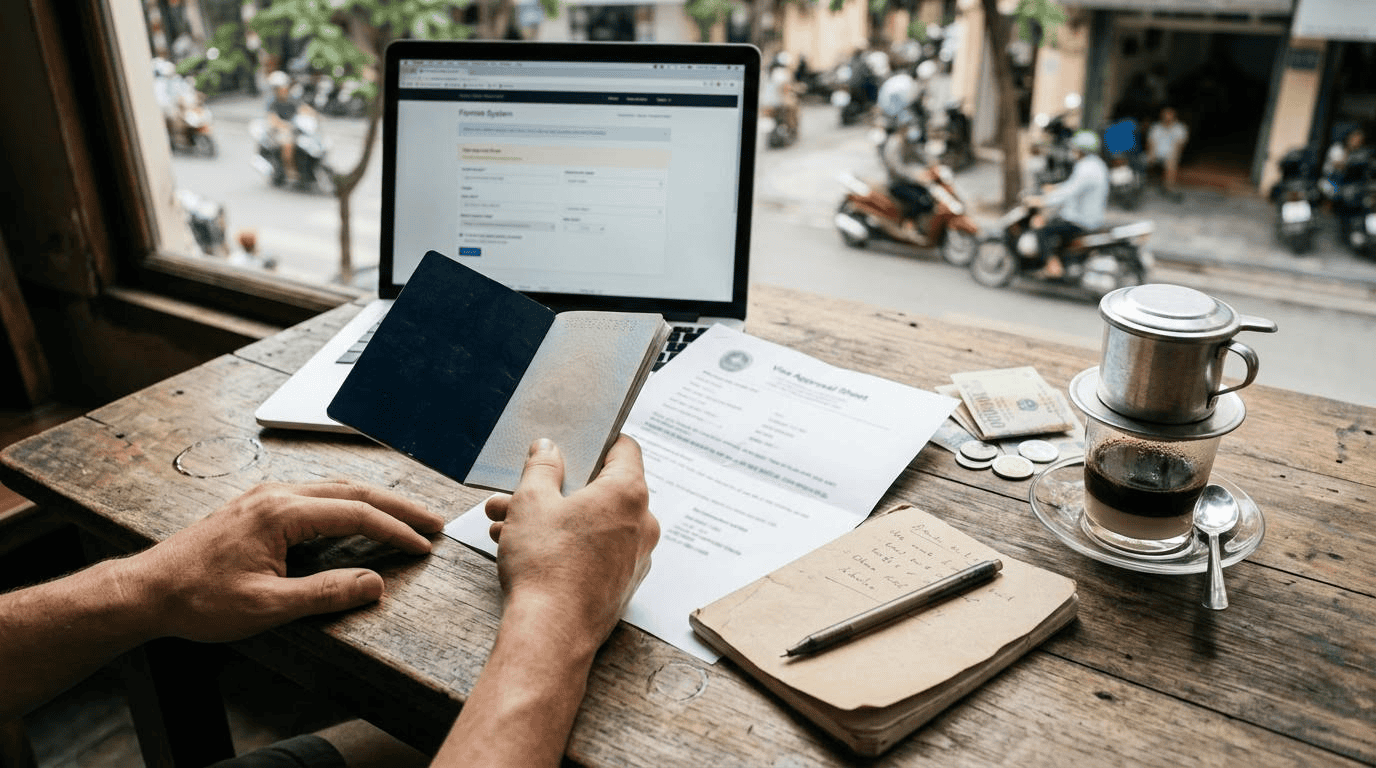
US citizens need a visa for Vietnam. According to Vietnam's official tourism board visa requirements page, the government issues e-visas to citizens of every country, and you apply through the official portal at evisa.gov.vn. Processing takes 3 to 5 working days.
Prices checked on 27 November 2026 against current official fees.
| E-visa type | Validity | Fee (USD) | Best for |
|---|---|---|---|
| Single entry | Up to 90 days | $25 | One trip in and out of Vietnam |
| Multiple entry | Up to 90 days | $50 | Side trips to Cambodia, Laos or Thailand with a return to Vietnam |
Source: Vietnam National Authority of Tourism, visa requirements page (Last updated 2026)
The multiple-entry option is the one most route planners miss. If your plan includes a hop to Angkor in Cambodia and a flight back into Ho Chi Minh City, a single-entry e-visa ends when you leave, and you would need a new one to return.
The passport rule trips up even more travellers. The State Department says your passport must be valid for six months beyond your planned stay, with at least one blank page for the visa stamp. Airlines check this at the departure desk, so a passport that expires in five months can end a trip before it starts. Keep a printed copy of the e-visa approval with your documents, and see our travel packing list essentials for the rest of the paperwork to carry.
Check before you travel: visa fees, validity and exemption lists change. Apply only through the official government e-visa portal named on the Vietnam tourism board page, not through look-alike agency sites, and confirm the rules on the day you apply.
Bag grabs and taxi tricks cause most of the friction, and each one has a simple fix
The UK government's Vietnam safety and security advice says violent crime against foreigners is rare and that petty theft is the common problem. It also notes that theft tends to rise around Christmas and the Tet Lunar New Year, when streets and markets are at their busiest.
Here is how the main issues play out, with the habit that solves each one:
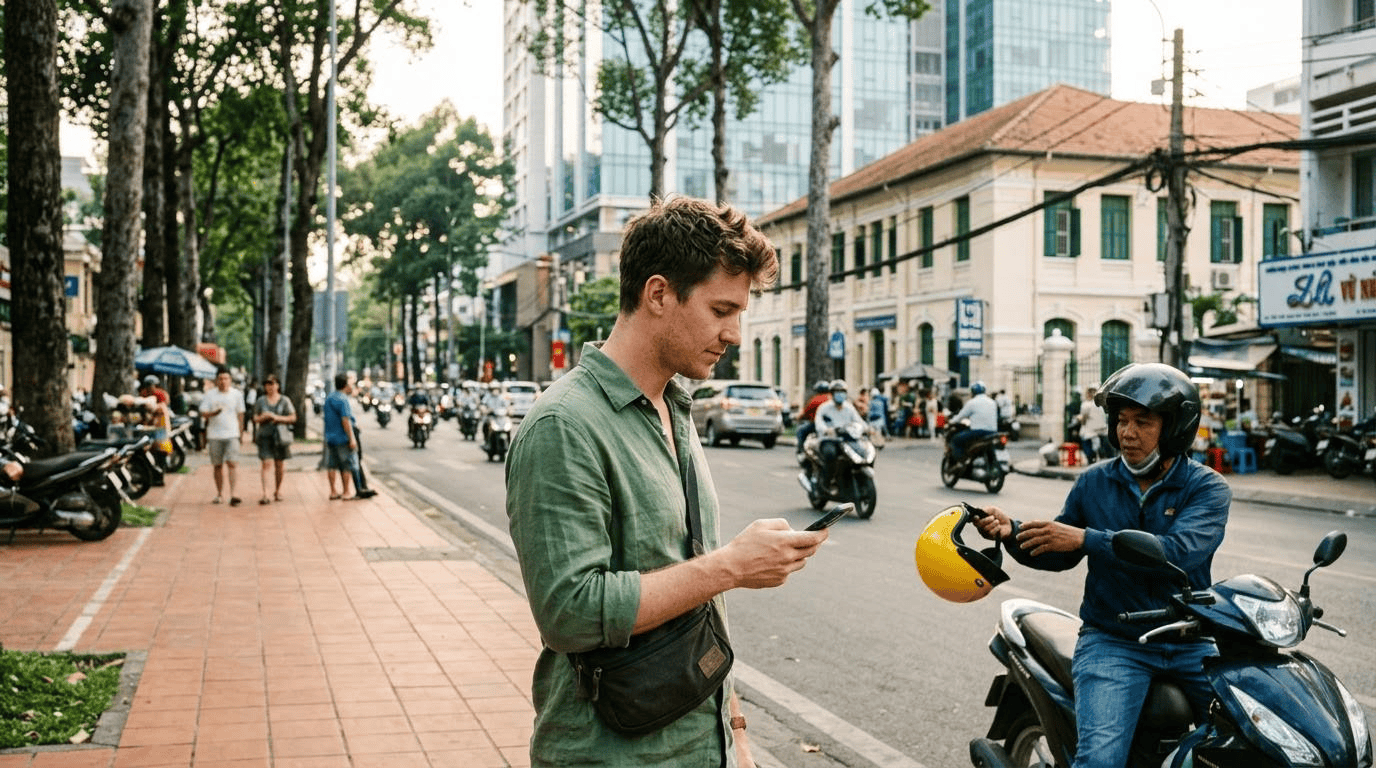
- Bag snatching from passing motorbikes. Wear a cross-body bag in front of you, walk with it on the side away from the road, and keep your phone in your hand only when you stand back from the curb. If someone does grab a bag, let it go. Official advice is clear that no phone is worth an injury.
- Pickpocketing in crowds. Night markets, festivals and busy bus stations are the usual spots. A zipped inner pocket for cards and a second card kept at the hotel limit the damage of any loss.
- Unlicensed taxis. Book rides through an app or your hotel, and match the plate and driver photo before you get in. The UK advice also warns about scammers who pose as ride-hailing staff.
- Free transfer offers. Be cautious of free bus transfers to hotels that you did not arrange in advance. Your hotel can confirm whether a pickup is theirs.
- Too-good job offers. If you plan a longer stay, ignore online offers of high-paid work. The UK advice links some of them to trafficking and coerced scam work.
None of these call for anxiety. They are the same habits that keep you comfortable in Barcelona or Rome, applied to a city where scooters outnumber cars.
If something does go wrong
Report a theft to the local police station and ask for a written report, because most insurers need one before they pay a claim. If your passport is lost or stolen, contact your embassy or consulate straight away: the US has an embassy in Hanoi and a consulate general in Ho Chi Minh City. You also need a replacement exit visa from Vietnamese immigration before you leave, so allow a few working days in your plans. Keep digital copies of your passport, e-visa and insurance policy in your email so you can reach them from any phone.
Weather shapes a Vietnam trip more than crime, so match each region to the month you travel
Vietnam stretches across three climate zones, and their wet seasons do not line up. The UK government's advice sets out the pattern:
| Region | Rainy season | Flood-prone areas named |
|---|---|---|
| North (Hanoi, Ha Long Bay) | June to September | Around Hanoi along the Red River |
| Central (Hue, Da Nang, Hoi An) | October to December | Central Vietnam in October and November |
| South (Ho Chi Minh City, Mekong Delta) | June to September | The Mekong Delta |
Source: UK Foreign, Commonwealth and Development Office, Vietnam safety and security
The same advice says tropical cyclones affect Vietnam's eastern coast, normally between May and November, bringing strong winds, heavy rain and transport disruption.
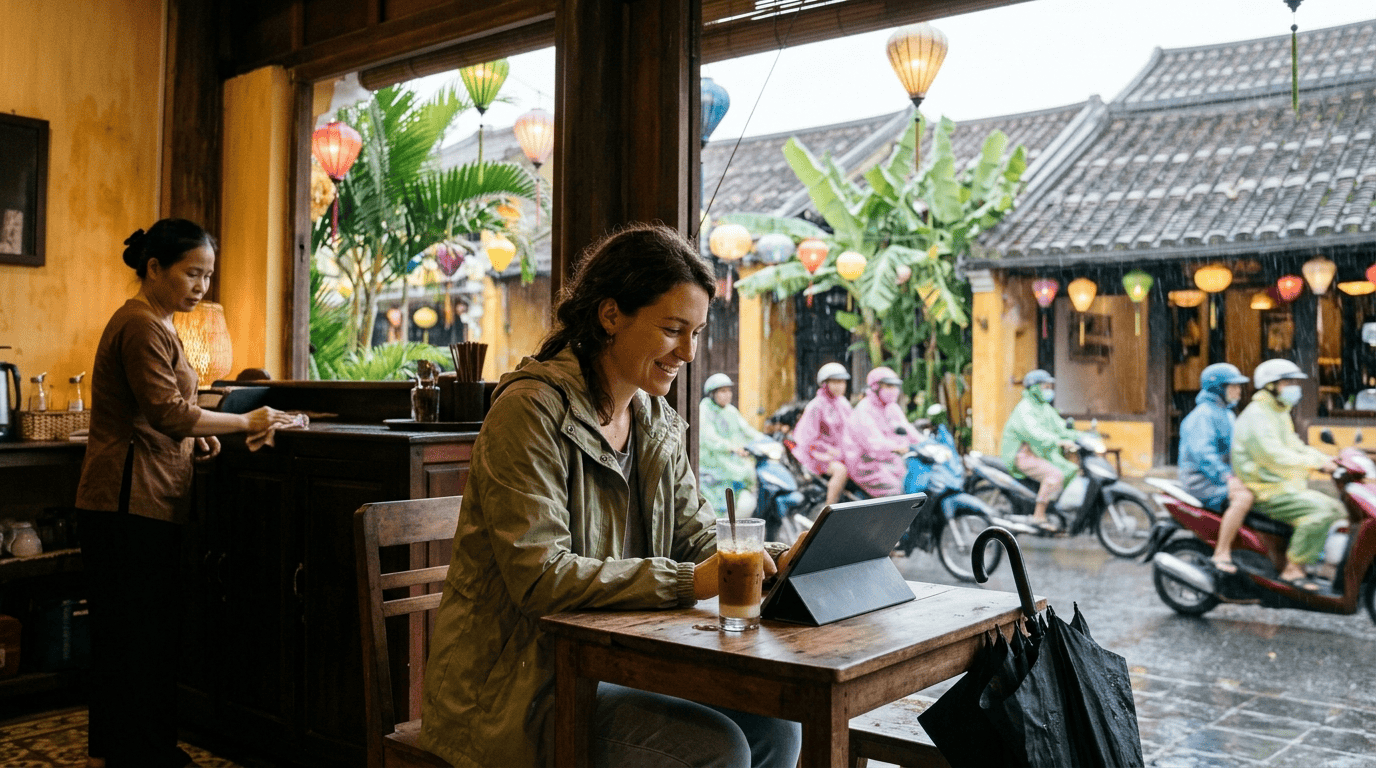
The planning insight: the central coast runs on the opposite calendar to the north and south. In October and November, Hanoi and Ho Chi Minh City are drying out while Hoi An and Hue reach their wettest weeks. If you travel in those months, give the central leg flexible days or flip the route so you reach Hoi An last, when a weather delay costs you less. From roughly January to April, conditions are more settled across the country, and the cooler months also suit hiking trails across Asia if you want to add a trek.
One calendar event matters as much as the weather. Tet, the Lunar New Year, falls in late January or February and is the country's biggest holiday. Trains, flights and buses fill weeks ahead as families travel home, prices rise, and some family-run shops and restaurants close for several days. The UK advice also notes that petty theft rises in this period. If your dates overlap Tet, book transport early and expect quieter streets in the big cities once the holiday starts.
Check before you travel: storms can form outside the usual season. In the days before a coastal or boat trip, check Vietnam's national weather service forecasts and follow local instructions, including boat cancellations and evacuation orders.
Street food, drinks and health: a short checklist covers what matters
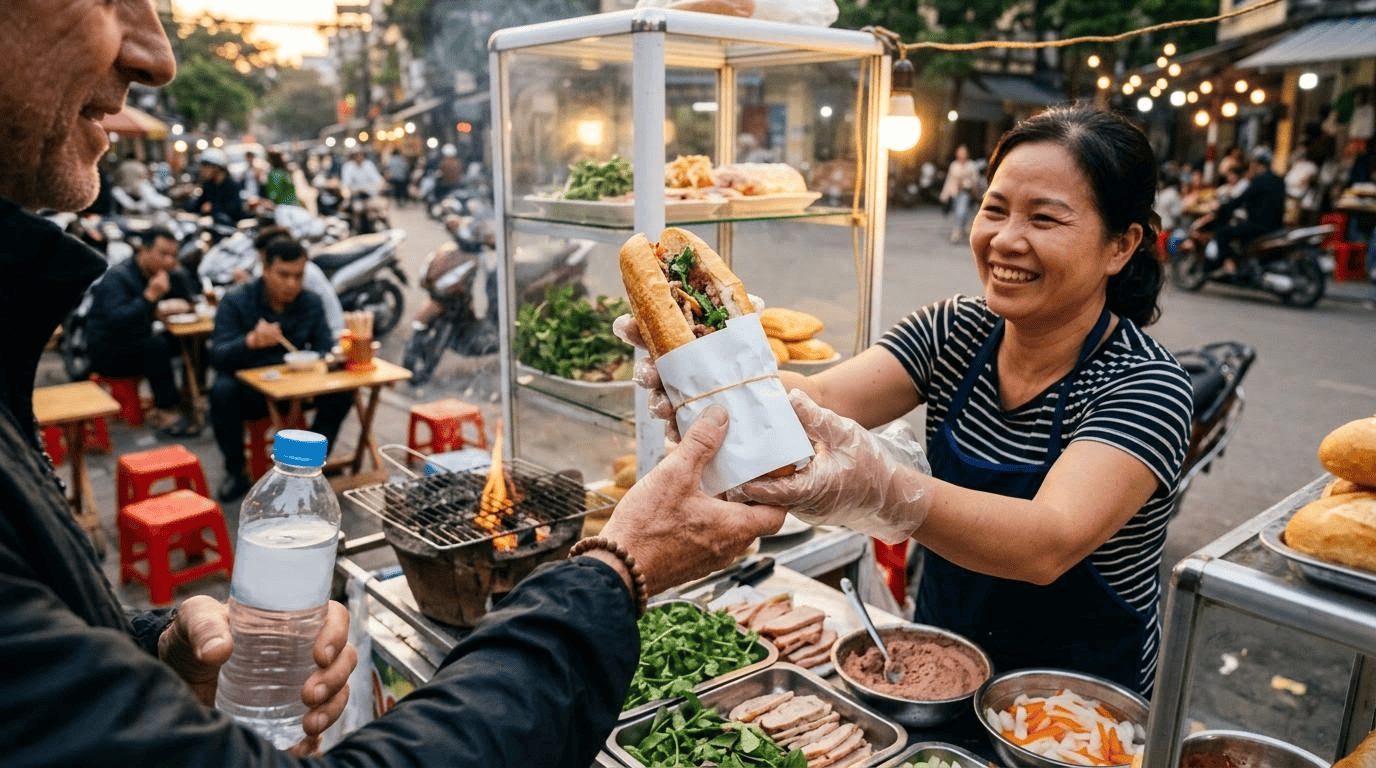
Vietnamese street food is one of the best reasons to go, and a few simple rules keep it that way:
- Pick busy stalls where food is cooked to order in front of you. High turnover means fresh ingredients.
- Drink sealed bottled water and use it for brushing your teeth in budget rooms.
- Buy your own drinks and keep them in sight in bars. The UK advice warns that methanol in drinks bought in tourist-area venues has caused deaths, and that even small amounts can kill. Stick to sealed bottles and cans, or reputable venues, and seek urgent medical help if you feel unwell after drinking.
- Book a travel health appointment 6 to 8 weeks before you fly to review routine and travel vaccines and mosquito protection for your route.
- Buy travel insurance that covers medical evacuation and the activities you plan, such as boat trips and trekking.
Two legal points belong on the same list. Vietnam treats drug offences very severely, and vaping products are banned. Leave both out of your bag entirely.

So, is it safe to visit Vietnam? Yes, for travellers who plan their transport and watch their bags
Official advice from the US puts Vietnam at its lowest caution level, and UK advice describes violent crime against foreigners as rare. What remains is practical: traffic, petty theft and seasonal weather, each with a clear fix. Use trains, flights and app-booked rides instead of renting a scooter, carry your bag on the side away from the road, apply for the e-visa through the official portal, and match each region to its dry season.
Do those four things and you spend your energy where it belongs: early pho in Hanoi, lantern-lit evenings in Hoi An, a night on Ha Long Bay and the buzz of Saigon's streets. If you are comparing destinations, the same source-first approach runs through our guide to visiting Cairo safely. For is it safe to visit Vietnam, the evidence points to a confident yes.
Frequently asked questions
Is Vietnam safe for American tourists?
Yes. The US State Department rates Vietnam at "Exercise normal precautions," its lowest advisory level. The main risks it lists are petty theft in crowded areas and dangerous road traffic.
Do US citizens need a visa to visit Vietnam?
Yes. US citizens need a visa before arrival. A single-entry e-visa costs $25 and is valid for up to 90 days, applied for through the official portal at evisa.gov.vn, with processing in 3 to 5 working days.
How long must my passport be valid for Vietnam?
Your passport must be valid for six months beyond your planned stay, with at least one blank page. Airlines check this before boarding.
Is it safe to rent a scooter in Vietnam as a tourist?
The US State Department strongly discourages it. Riding legally requires a 1968 international driving permit with your home licence, a helmet and third-party insurance, and many travel policies exclude unlicensed riding.
What are the most common problems for tourists in Vietnam?
Bag snatching by thieves on motorbikes, pickpocketing in crowds and unlicensed taxis. Wear your bag away from the road and book rides through an app or your hotel.
When is the best time to visit Vietnam for dry weather?
It depends on the region. The north and south have their rainy season from June to September, while the central coast is wettest from October to December. January to April suits a full north to south route.
References
- Vietnam International Travel Information, U.S. Department of State, Last updated January 25, 2024
- Hoi An Ancient Town, UNESCO World Heritage Centre
- Visa Requirements, Vietnam National Authority of Tourism, Last updated 2026
- Vietnam travel advice: Safety and security, UK Foreign, Commonwealth and Development Office